
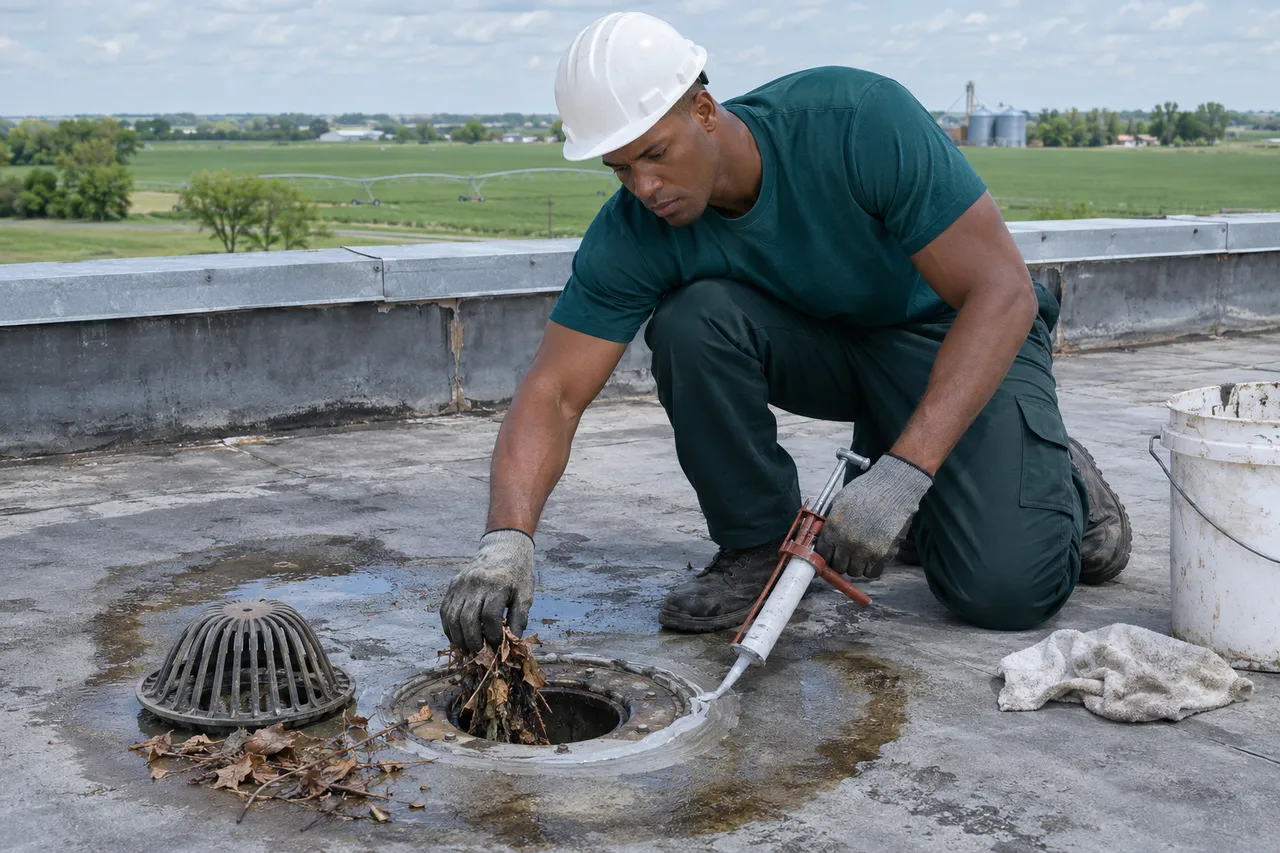
Flat Roof Repair
- Best On
- Single-ply, built-up, and modified bitumen roofs on low slopes
- Typical Work
- Seam and puncture patches, drain flashing, wet insulation cut-outs
- Watch For
- Ponding rings, blisters, and laps lifting near drains
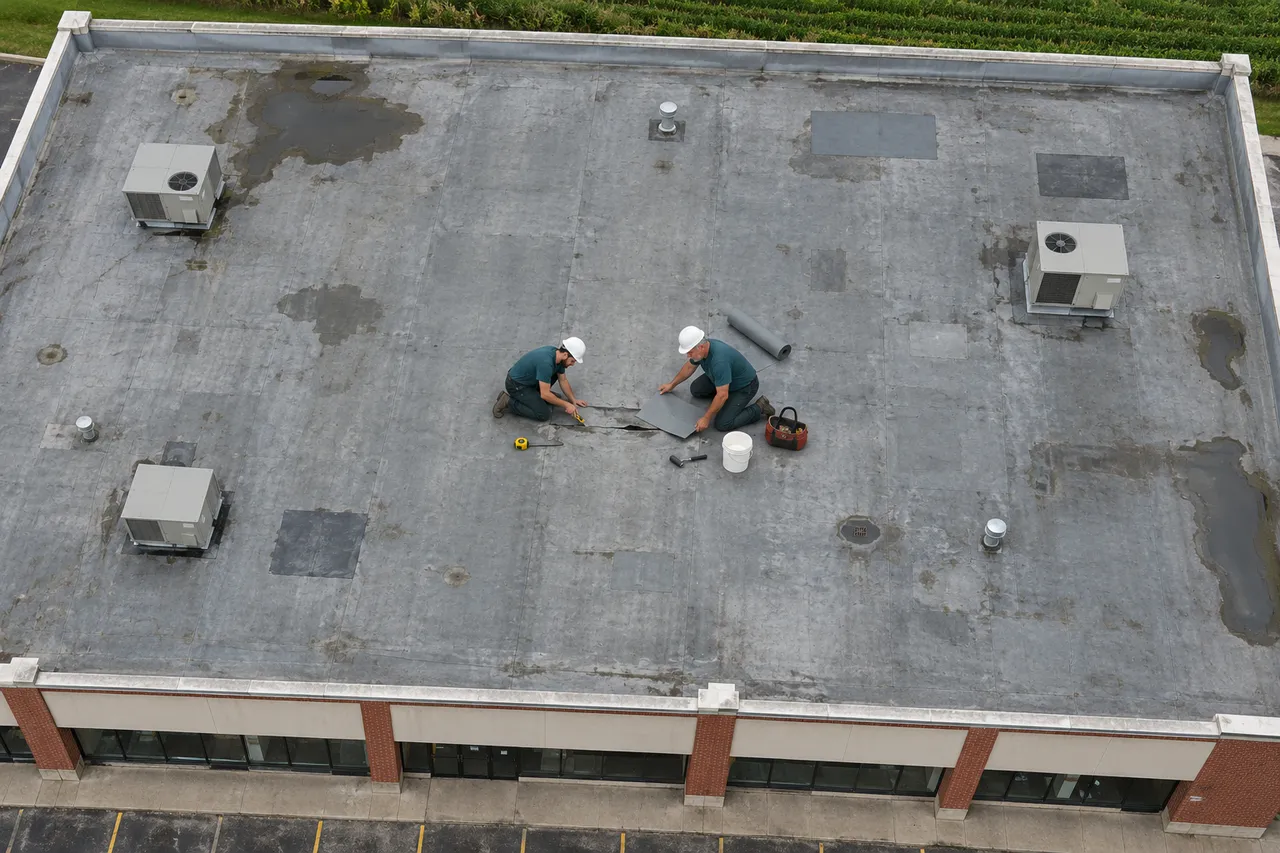
As a Hastings commercial roof repair contractor, we find where water gets in and fix the seam, drain, flashing, or fastener that let it through.
Four Repair Services
Hastings commercial roof repair falls into four kinds of work. Each column shows the roof it fits, the usual repairs, and what to watch for.
Roof Conditions
Most leaks start with one of six causes. Each card names what you can see and what it means for the roof.
Work Order
Five decisions, in the order they get made on the roof, from the first walk to the written close-out.
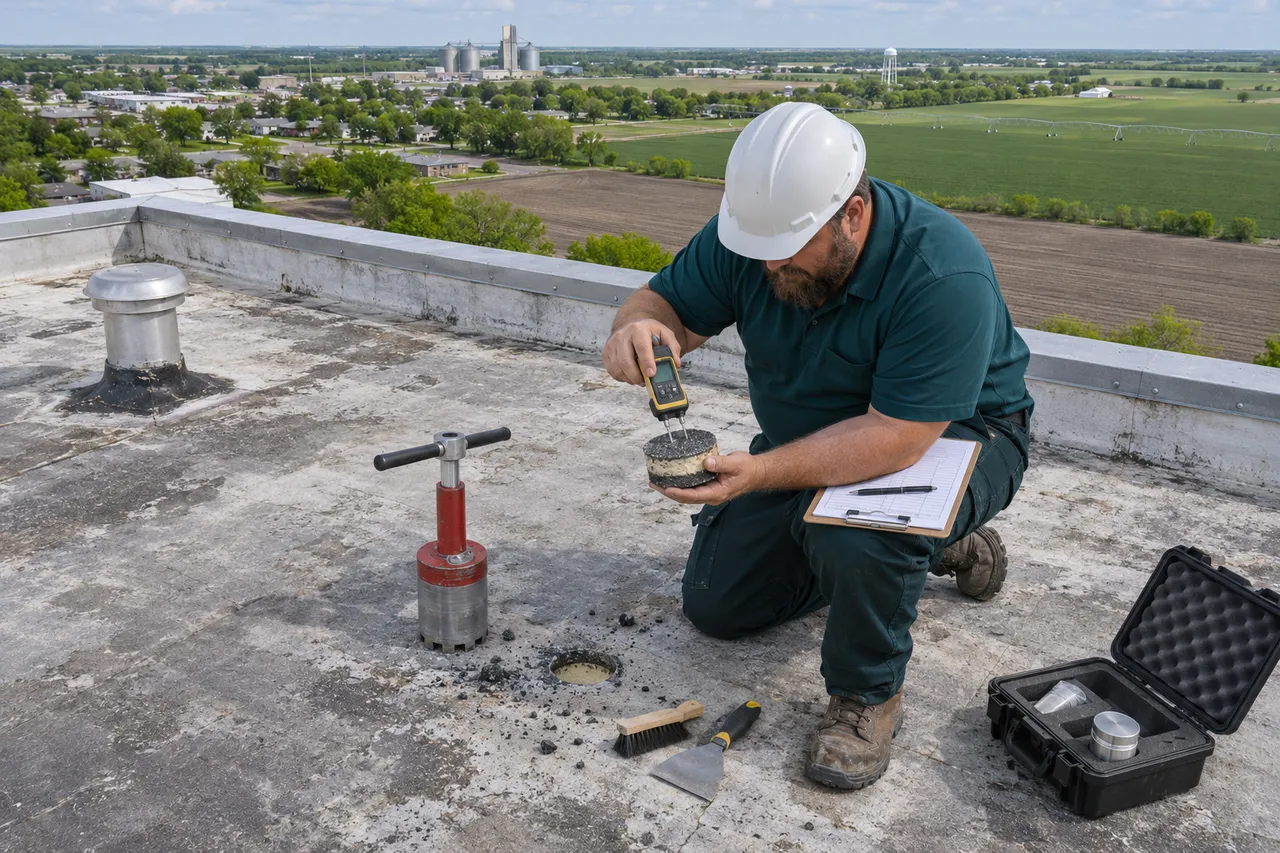
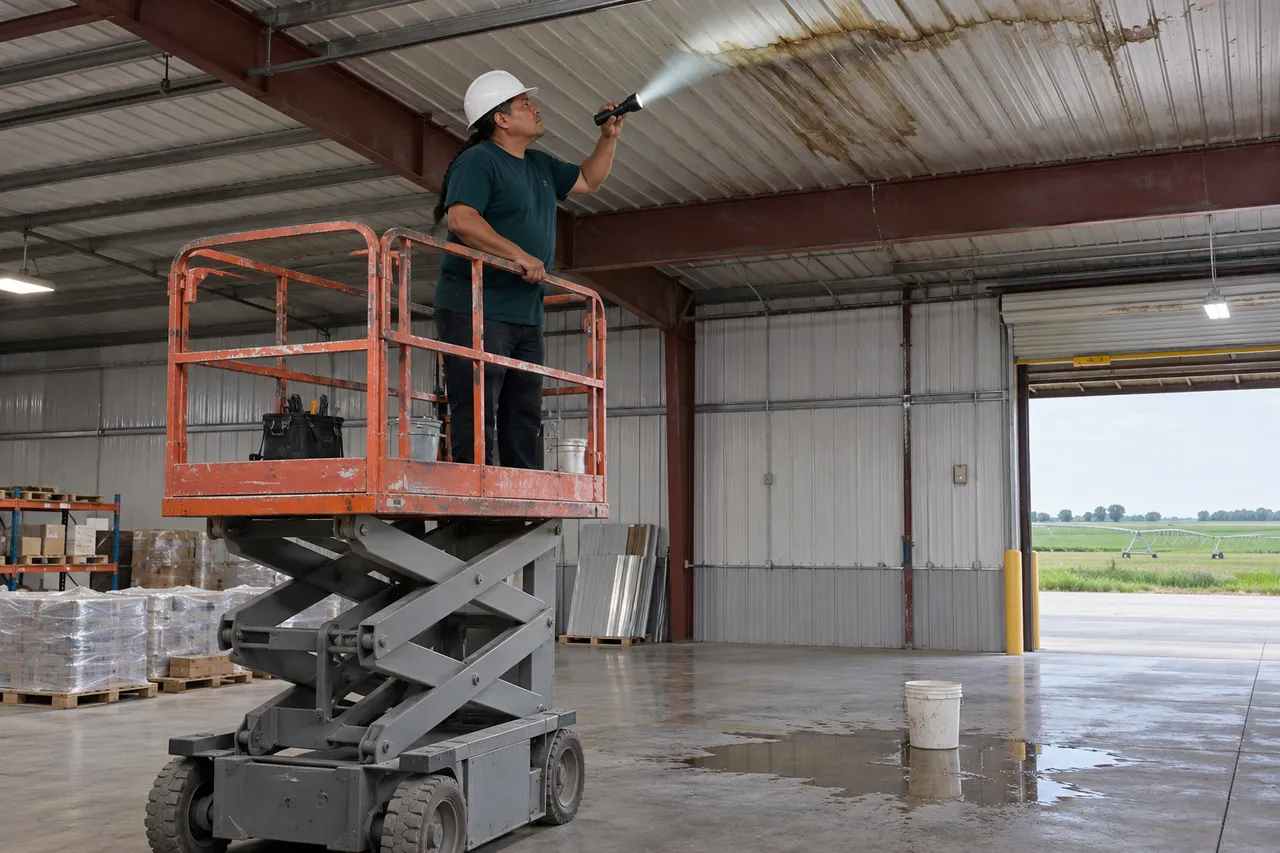
We walk the field, seams, drains, edges, and curbs, then check inside for stains and damp insulation. Core cuts and moisture readings show whether wet areas stay small or spread across the deck.
Isolated punctures, open laps, and failed flashing are repair work. When wet insulation or brittle membrane covers most of the roof, we tell you plainly that patching would only buy a short season.
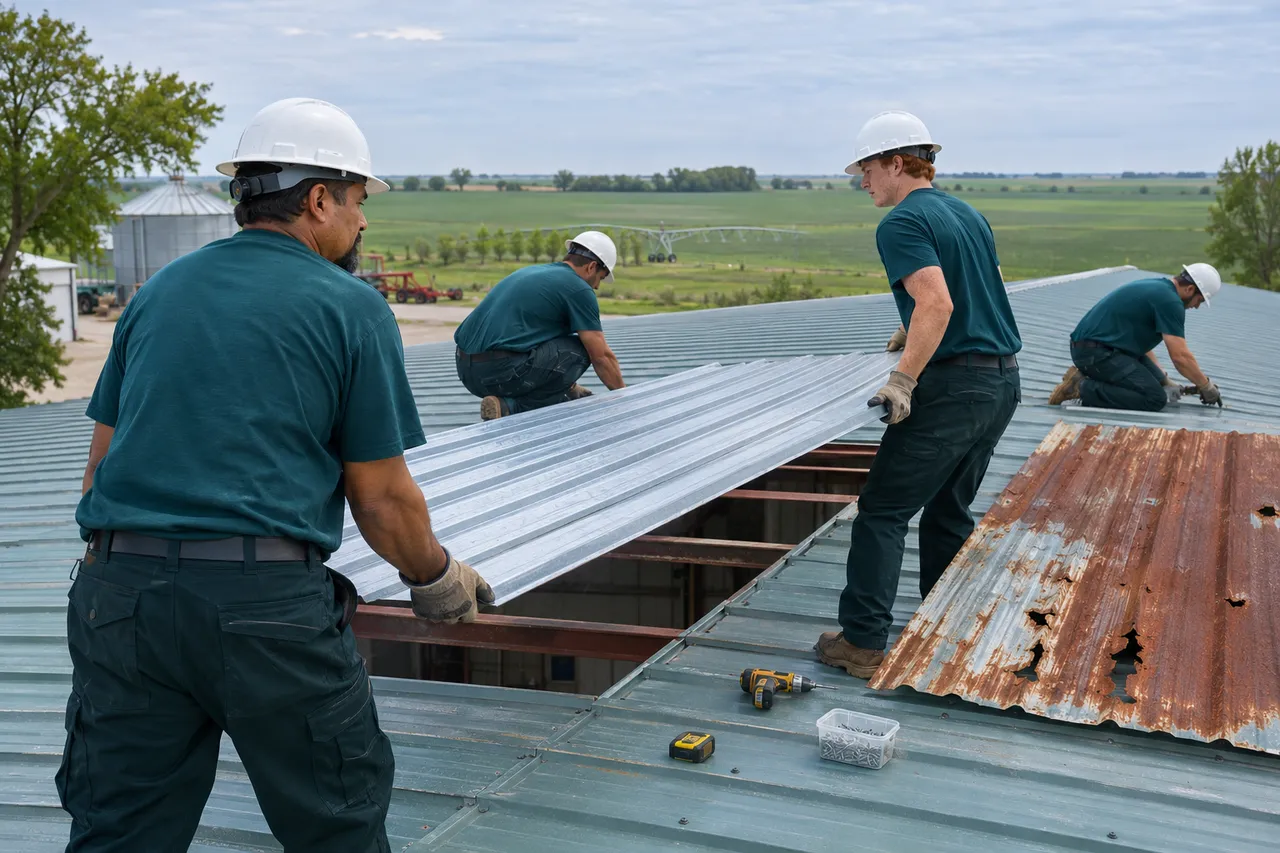
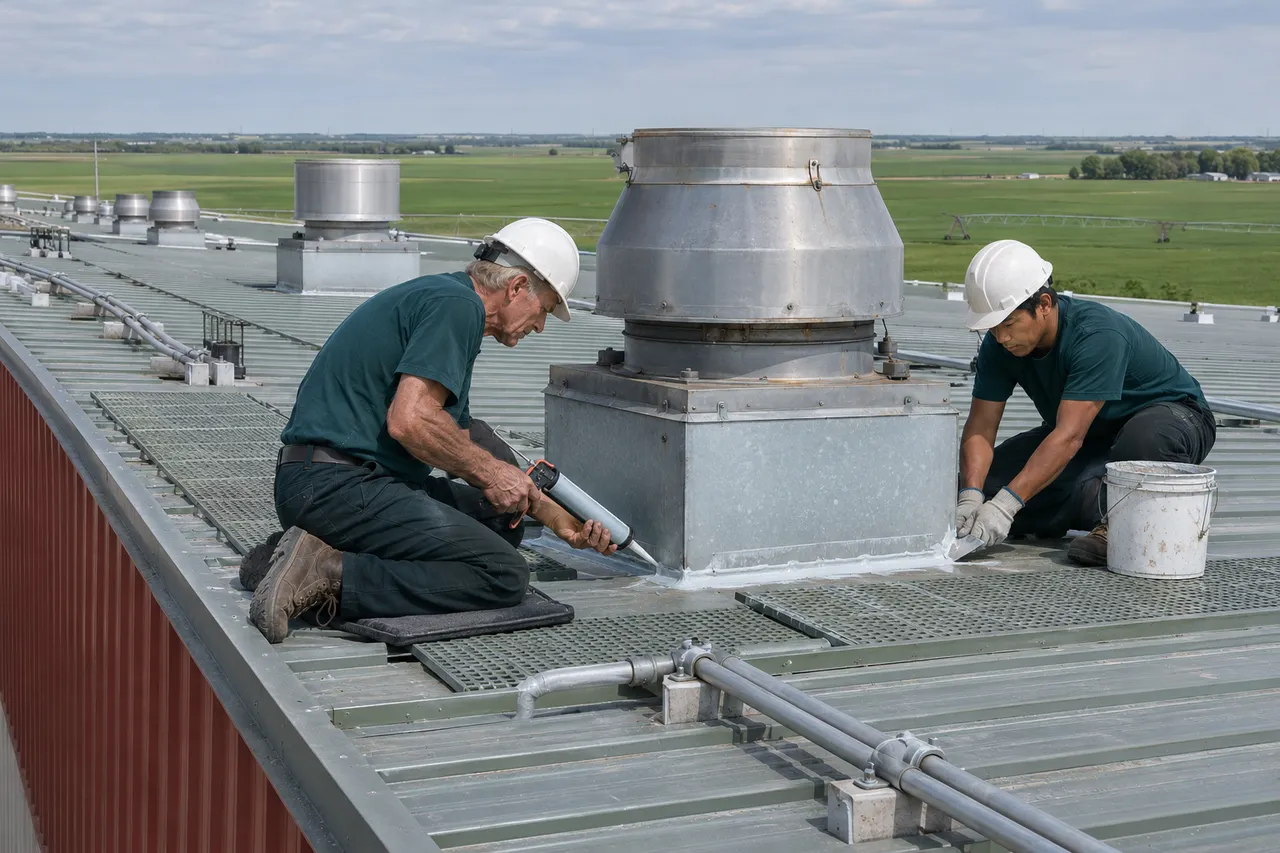
Matching material comes first. A TPO seam gets a heat-welded patch, an EPDM tear gets a taped cover strip, and a metal lap gets new sealant and fasteners sized for the old holes.
Plenty of repairs happen over open floors. The lift, hoist, and material staging go away from doors and docks, and each opened section gets closed up before anyone leaves the roof.
Every job ends with photos and a written note of what failed, what was fixed, and which areas to watch, so the next person on the roof starts with the history.
Water on the floor or a ceiling stain that keeps spreading needs a phone call. Move stock out from under the drip, and we will talk through the next step.
Call UsSeams, drains, or fasteners you want checked before the next storm? Book an inspection and get a written repair list for the roof.
Schedule Free Inspection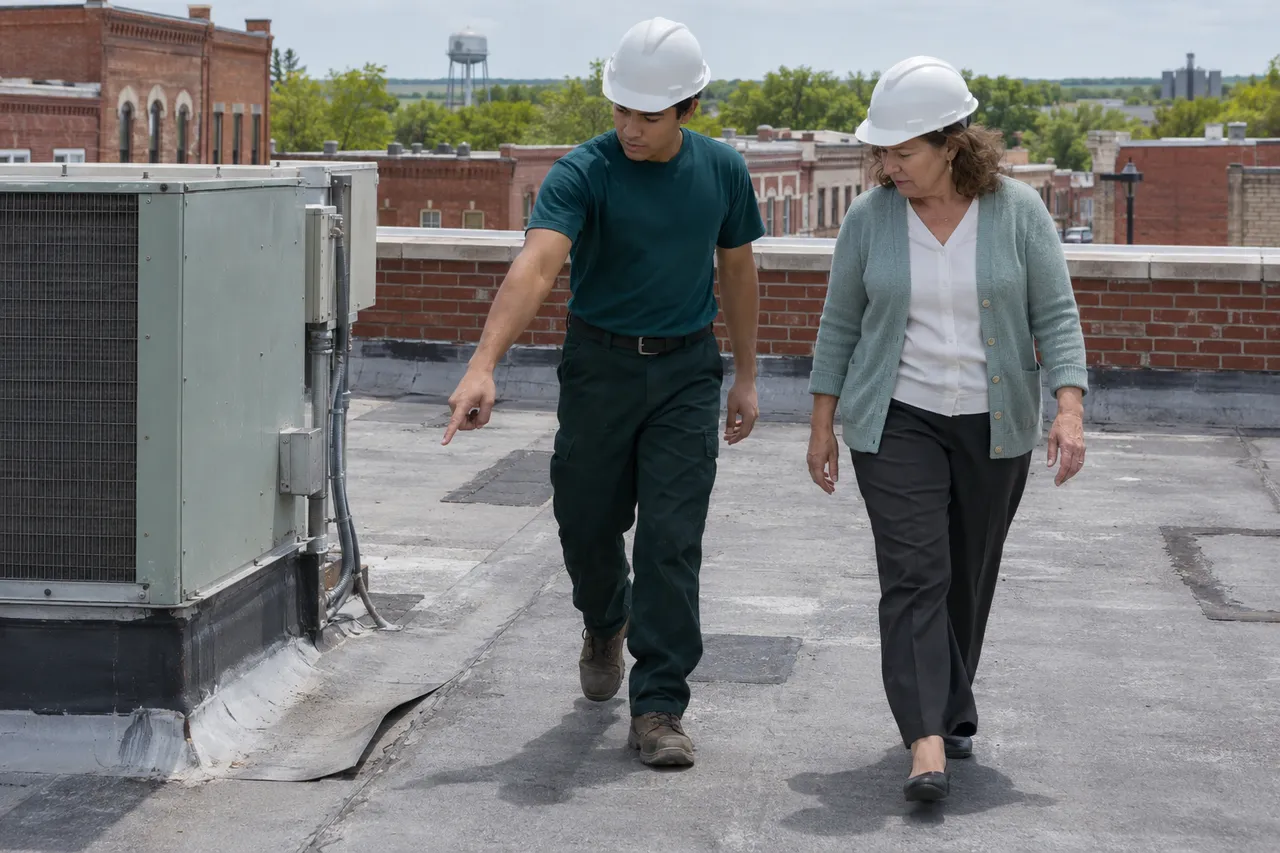
Why Repair Early
A repair made early keeps one small opening from turning into a soaked deck and a ruined ceiling.
Suitability
The answer comes from how much of the roof is wet or worn. These two cards set the paths side by side.
Service Area
Shops, co-op buildings, plants, and storefronts in the towns below are where we repair roofs most. Somewhere else? Call us or send us a message.
After a hailstorm, Superior buildings get checked for bruised membrane and cracked washers before that damage starts leaking.
Superior commercial roof repairMetal shops and machine sheds in Elm Creek get screw, lap, and ridge cap repairs that stop drips over equipment.
Elm Creek commercial roof repairHarvard roofs get freeze-thaw repairs at flashing and laps, timed to the spring and fall weather windows.
Harvard commercial roof repairStorefront roofs in Red Cloud get leak repairs scheduled around open hours and the stock sitting below.
Red Cloud commercial roof repairKenesaw owners who call at the first stain get small drain, lap, and curb repairs before the deck rusts.
Kenesaw commercial roof repair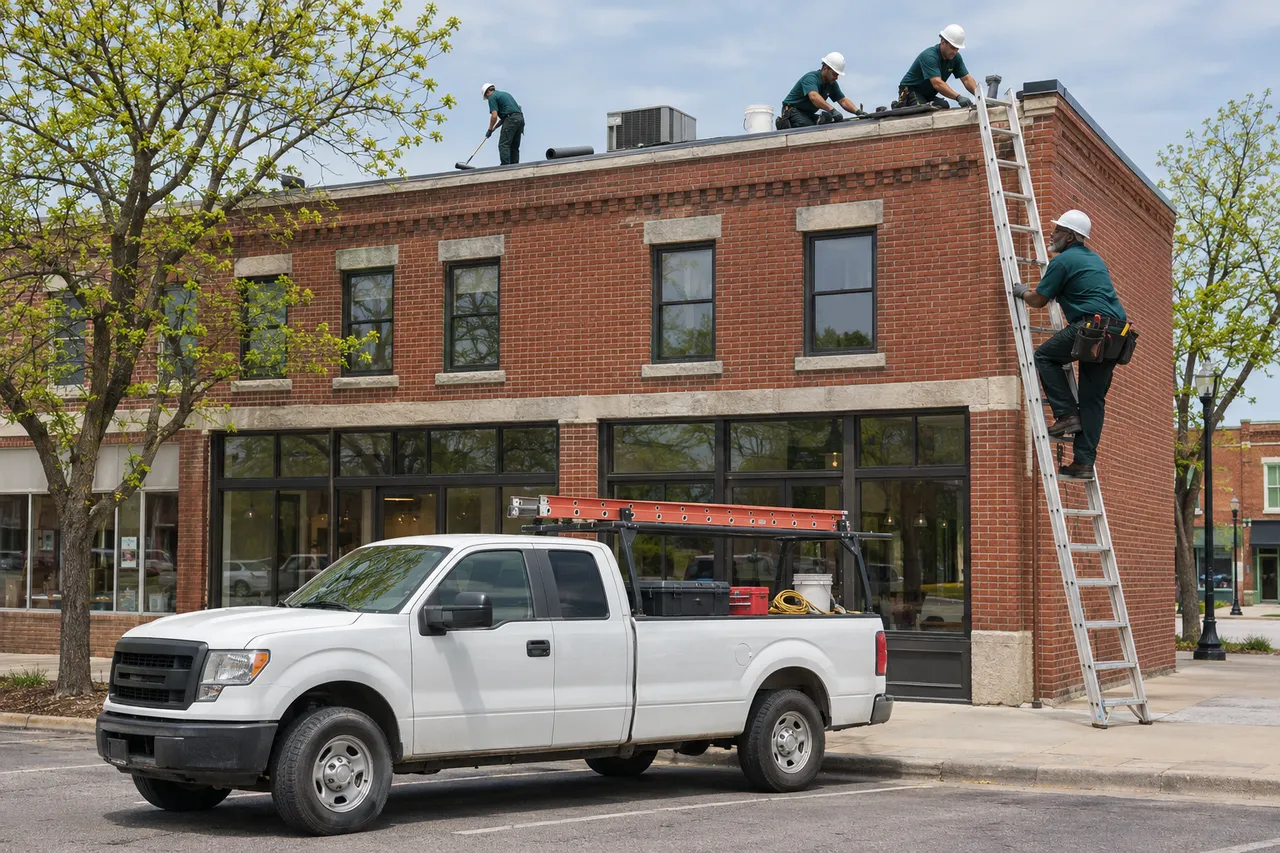
Question about your own roof?
Describe the stain, the drip, or the storm, and we will tell you what to check first.
Call UsOwner Questions
Repair it when the damage sits in a few spots and the membrane or panels around them are still firm. Punctures, open laps, and failed flashing are all repair work. Replacement makes sense once moisture readings show wet insulation across large areas, because patching then chases one leak after another.
The first goal is stopping more water from getting in. Open areas get a tarp or a temporary patch, blocked drains get cleared, and the drip inside is traced back to its entry point. The permanent repair waits until the surface is dry enough for adhesive, sealant, or new membrane to bond.
Start at the stain inside, then check the roof directly above it and upslope from it. Water runs along the deck before it drips, so seams, drains, curbs, and penetrations near that line come first. When nothing shows on the surface, an infrared scan or a controlled water test narrows it down.
It covers the membrane or panels, every seam, flashing at walls and curbs, drains, edge metal, and the curbs under rooftop units. We look for punctures, open laps, loose screws, ponding, and blisters, then check ceilings for stains. You get a written repair list ranked by how much water each problem lets in.
Nebraska's state building code adopts the 2018 International Existing Building Code, and Chapter 4 of that code covers repairs. Cities adopt the state code or one that conforms generally with it. The City of Hastings lists a separate roofing permit application, and Development Services can confirm whether your repair needs one.
Tell us where the water shows up and what the roof is made of. We will inspect it and hand you a written repair list.