
Freeze
Widening Cracks in Sealant
- You See
- Hairline cracks at curbs that look wider after winter.
- What It Means
- Water in the crack froze and expanded, and each cycle opened it a little more.
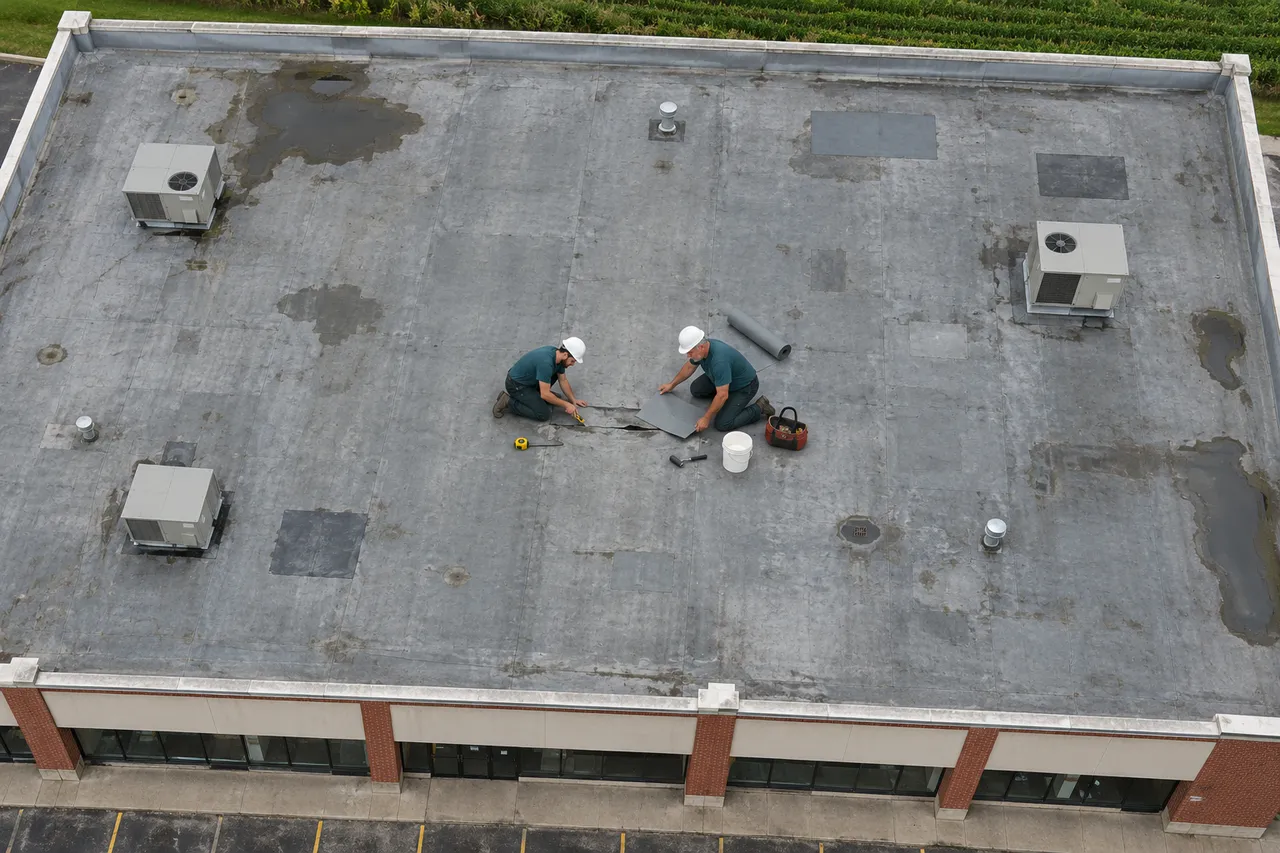
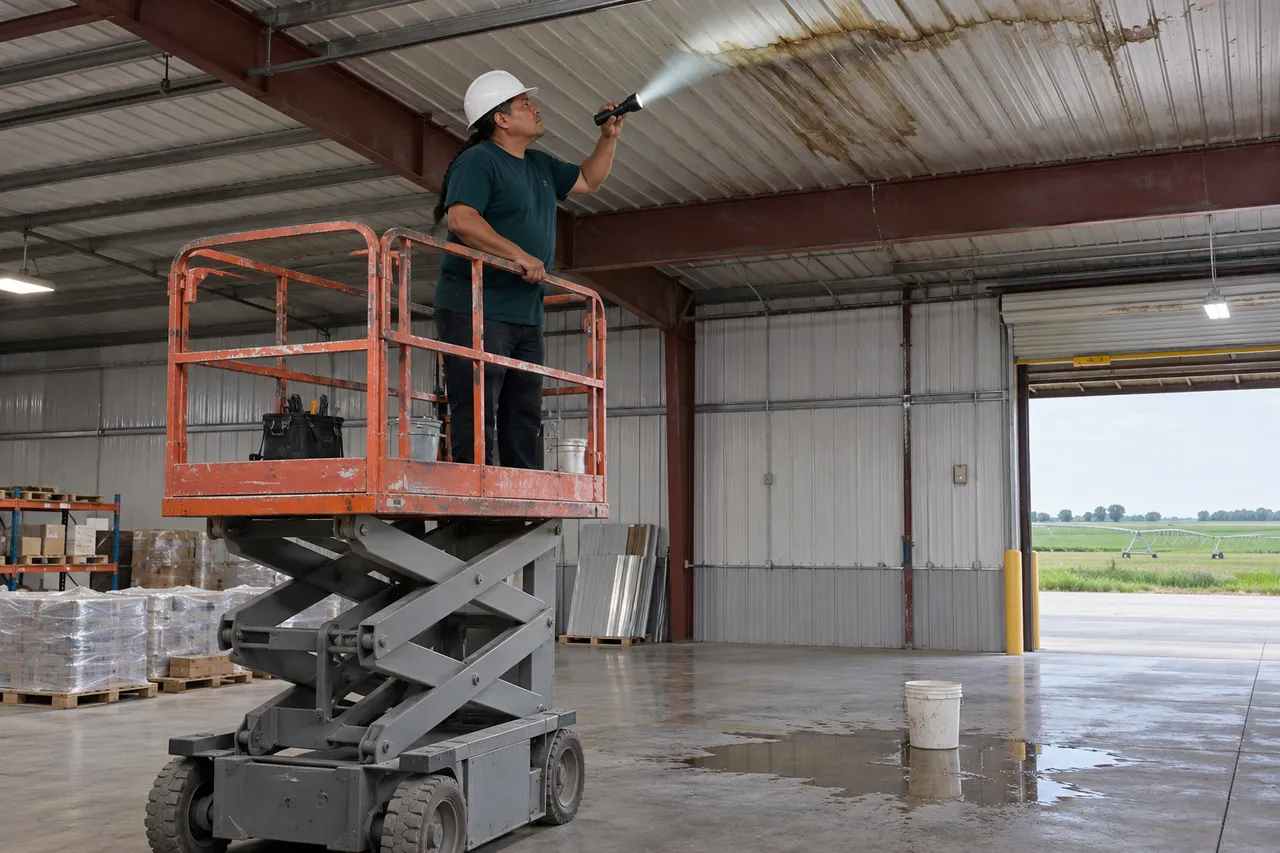
As a Harvard commercial roof repair contractor, we time flashing, seam, and drain repairs to the weather each material needs, from fall prep to spring checks.
Weather Windows
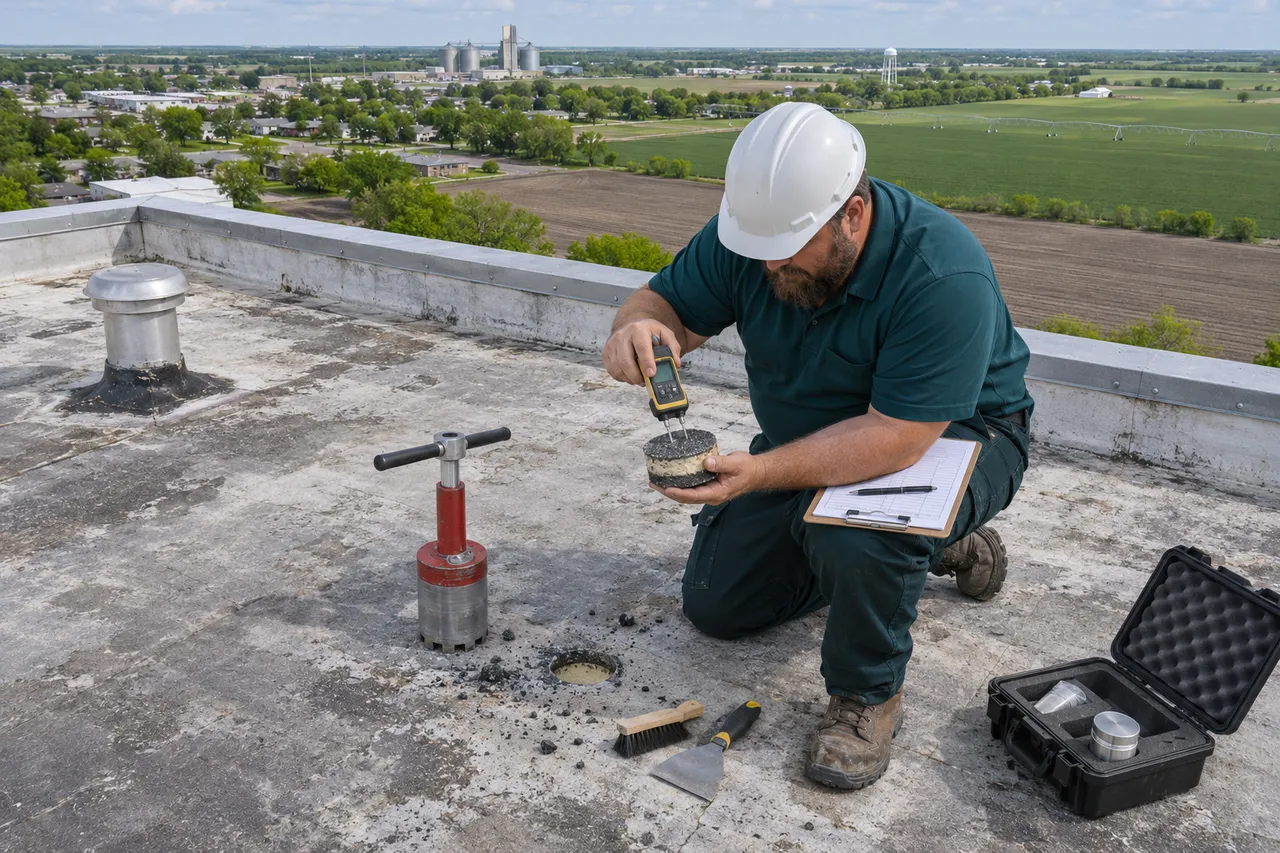
Harvard commercial roof repair follows the calendar. Adhesives, sealants, and seam tapes each need a minimum surface temperature and a dry deck, so a permanent repair in January looks different from one in May.
Fall is for sealing the small openings that winter will widen. Spring is for finding what the freeze-thaw months opened up. Winter leaks still get a temporary seal that holds until the material can be set properly.
Seasonal Conditions
Each season leaves its own mark on a commercial roof. These six show up most often.
Why It Matters
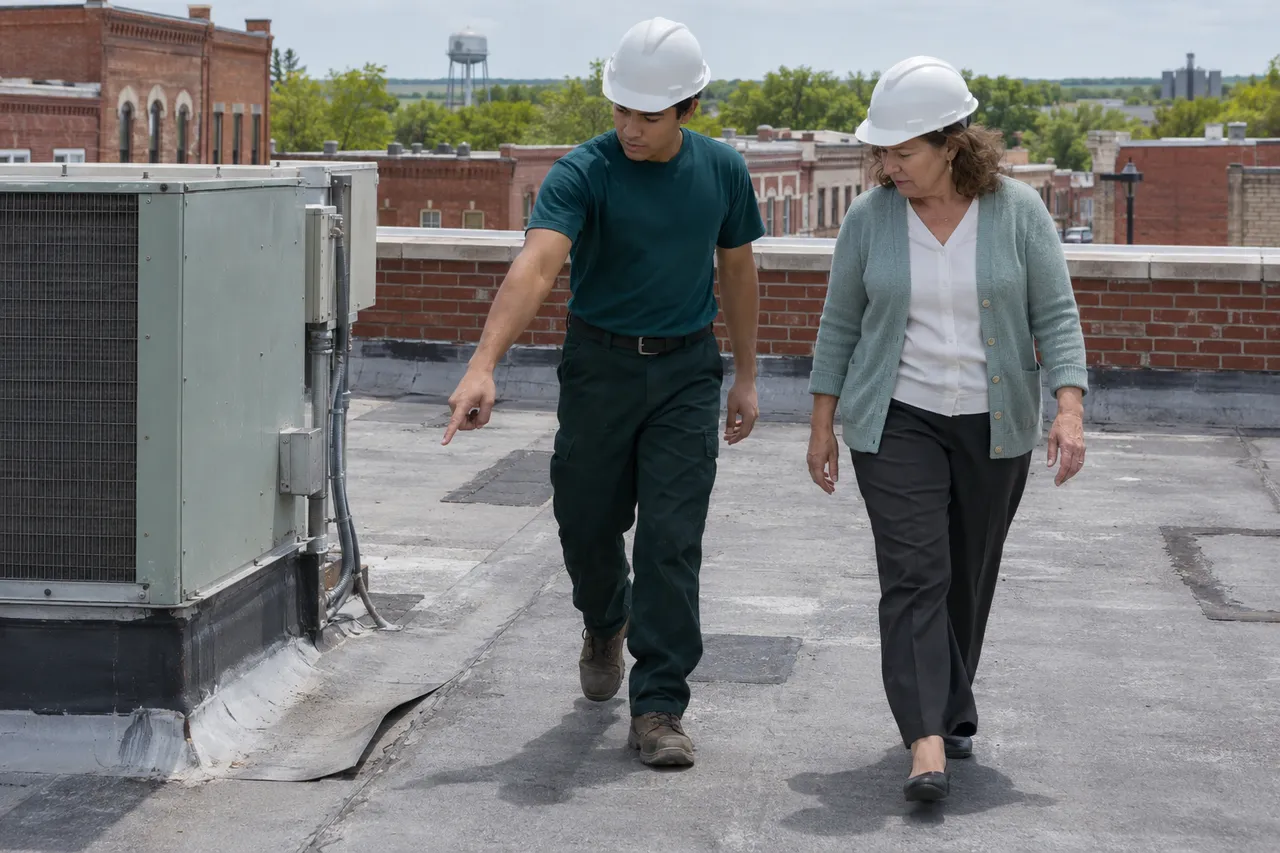
Repairs made in the right season set properly and stay put through the next one.
Services
These three services cover most seasonal repairs on Harvard shops, co-op buildings, and storefronts.
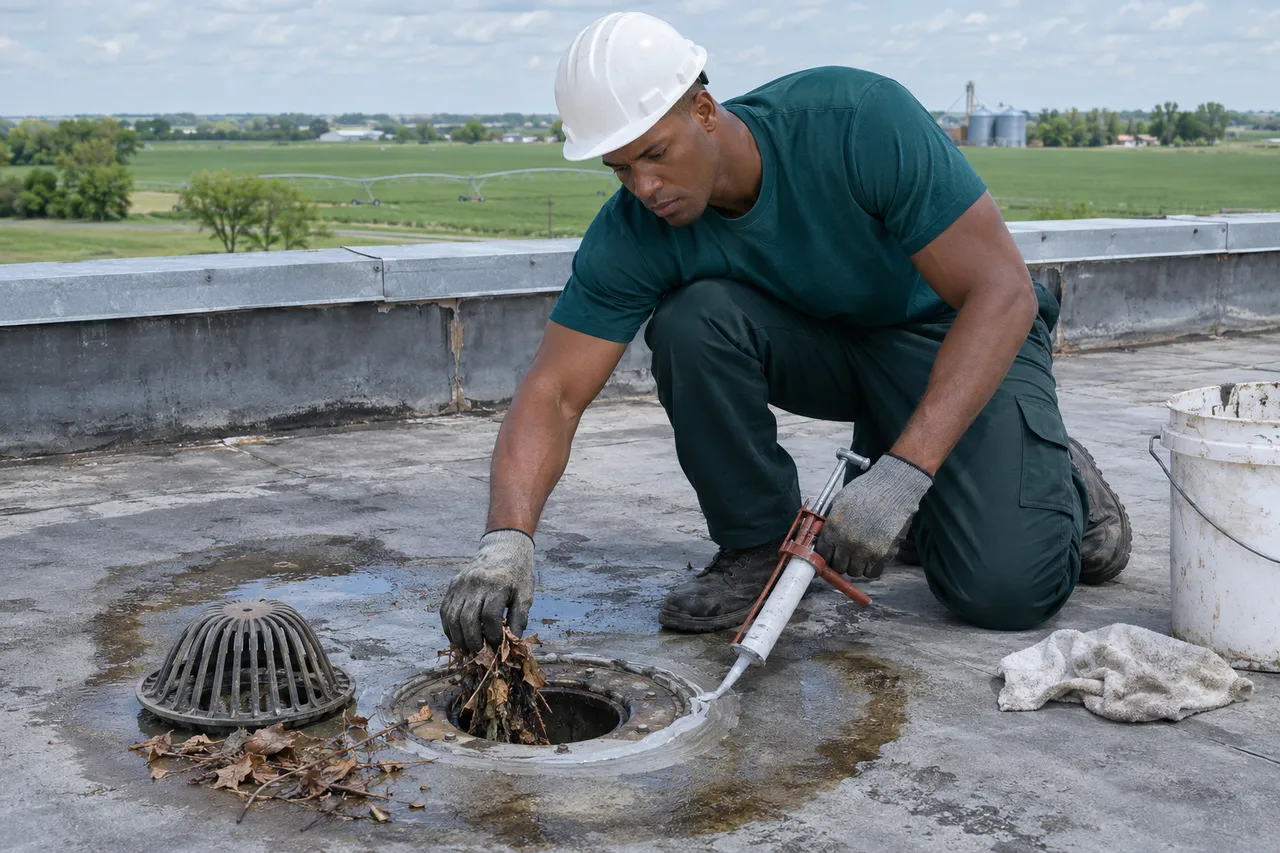
Fall seam and flashing repairs on low-slope roofs keep snowmelt out of the insulation.
Flat roof repair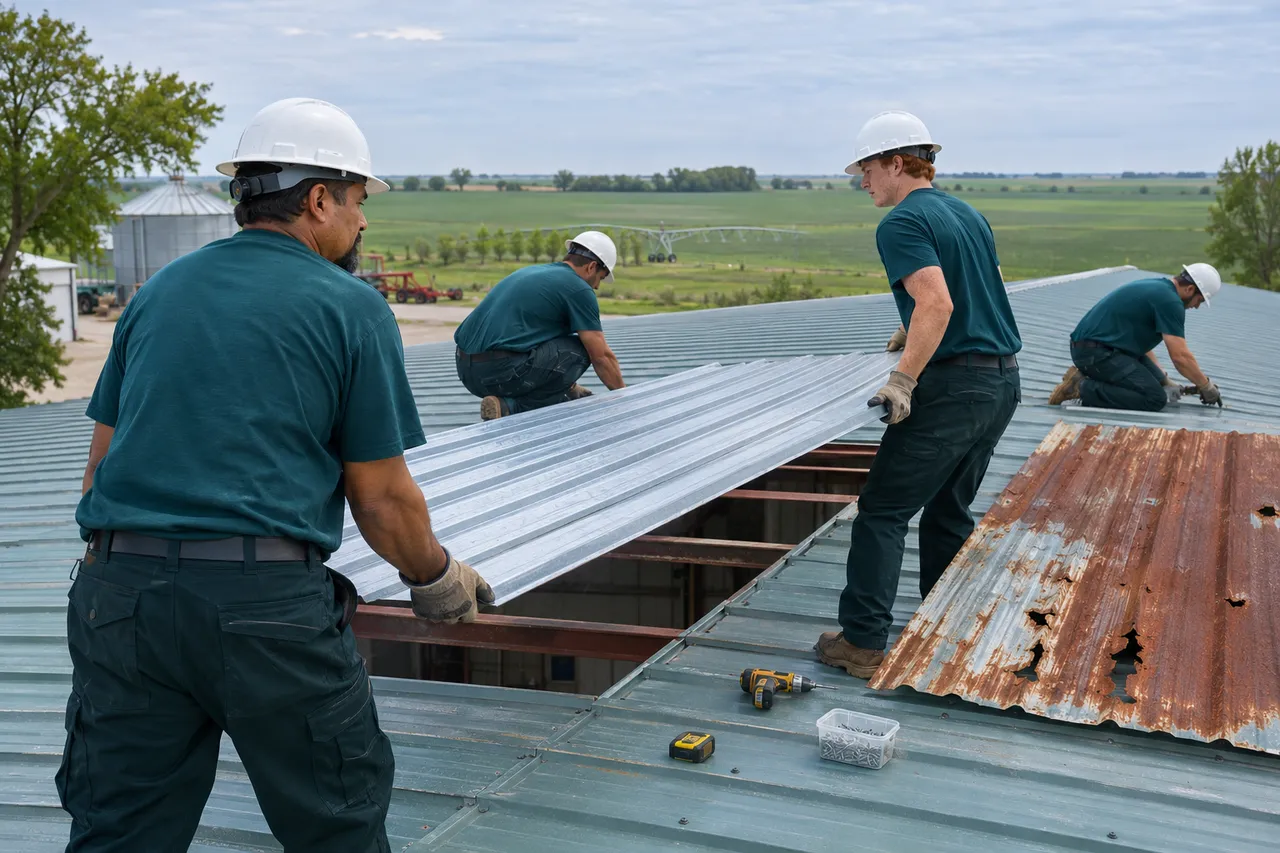
Washers and laps loosened by a hot summer get refastened before winter wind and snow.
Metal roof repair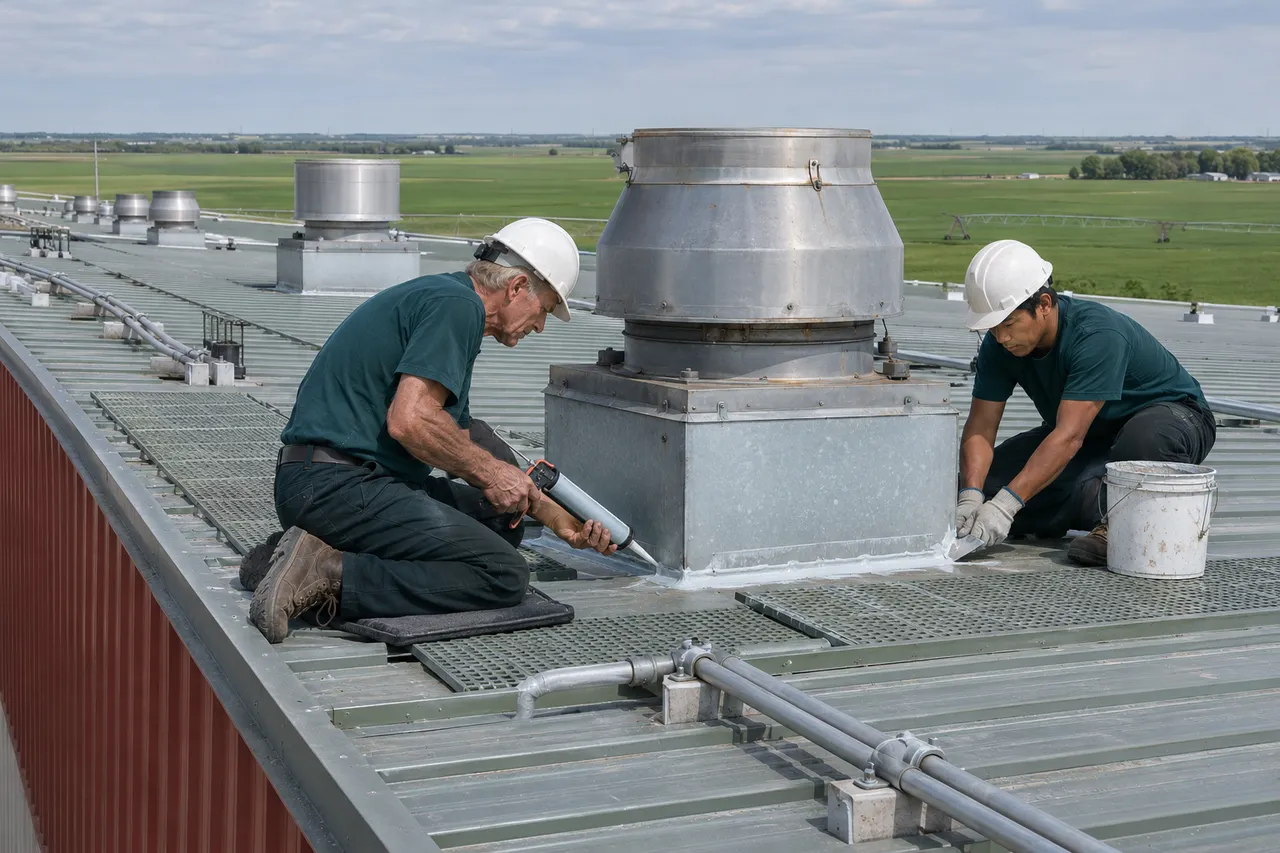
Co-op and processing roofs get drain and curb repairs scheduled around harvest traffic.
Industrial roof repairThaw leaks need a temporary seal right away. Call, and we will get water stopped until a permanent repair can set.
Call UsWant flashing and drains checked before winter or after it? Book an inspection and get a written repair list.
Schedule Free InspectionSeasonal Steps
Five decisions place each repair in the season where it works best.
A walk covers flashing, laps, drains, curbs, and edges, and an inside check finds stains. Each problem gets a note on whether it can wait for better weather.
In cold weather, an active leak gets a temporary seal rated for low temperatures. The permanent repair follows when the roof is warm and dry enough.
Seam tapes and adhesives need warmth, while drain clearing and fastener work go year-round. Repairs get grouped by what each material needs.
Before the first hard freeze, small cracks at curbs and walls get sealed and drains get cleared, so ice has less to work with.
After the thaw, the same spots get checked again, and anything winter opened goes on the next repair list.
Nearby Towns
We repair commercial roofs in Harvard and the towns below. For a building elsewhere, call us or send us a message.
Flat, metal, leak, and industrial roof repair across the city.
Hastings commercial roof repair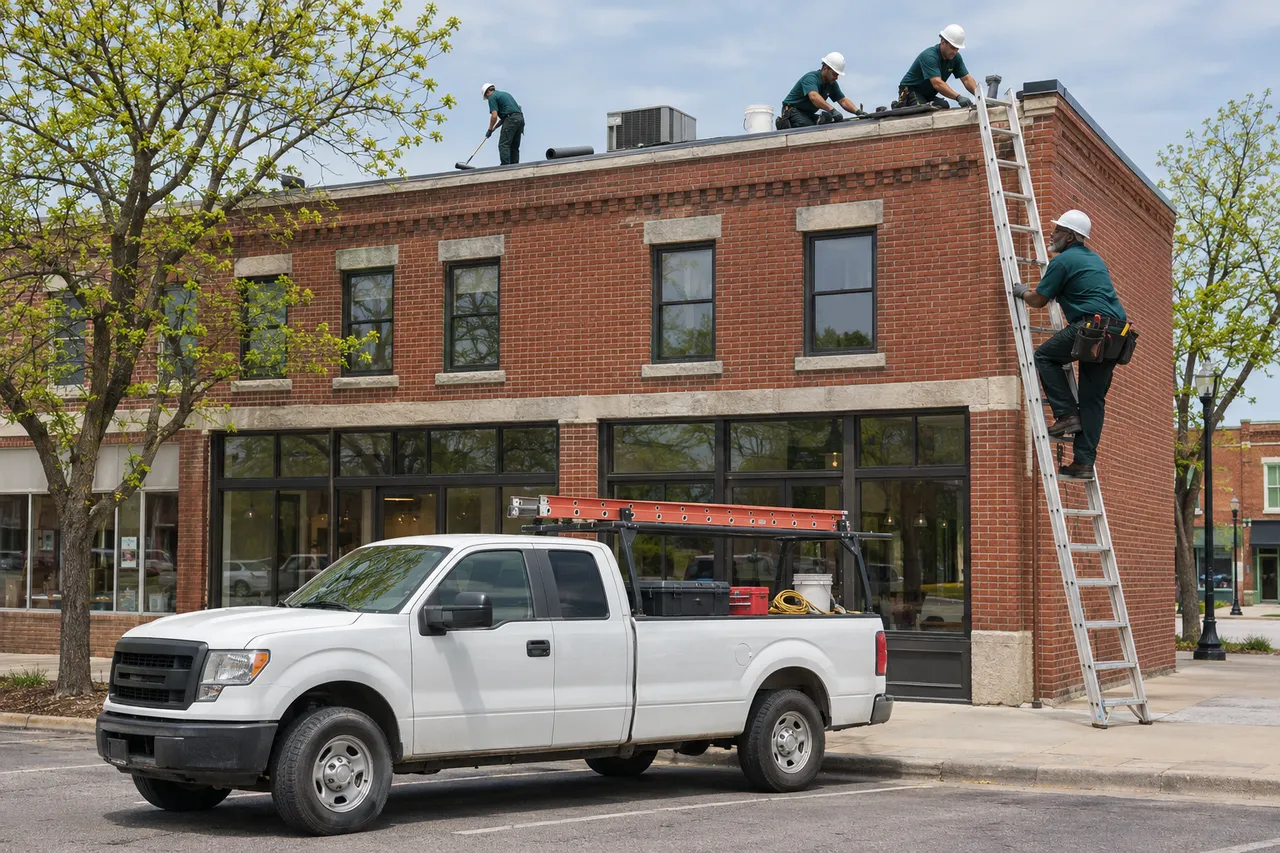
Question about your own roof?
Tell us when the leak started and what the weather was doing, and we will plan from there.
Call UsHarvard FAQ
Fasteners, flashing, and drains. Metal shops lose screw seals as panels move with the temperature. Low-slope roofs on older buildings develop open seams and ponding near clogged drains, and hail can puncture membrane or dent panels. Spring and fall checks catch these before interior damage spreads.
Yes. Winter leaks get a temporary seal rated for cold surfaces so water stops coming in. Call (402) 833-7506 with the address, and the permanent repair gets scheduled for the first stretch of weather warm and dry enough for it to bond.
Only for stopping active leaks and only when the roof is safe to walk. Ice and snow hide damage and make the surface dangerous, so full inspections and permanent repairs wait for clear, thawed conditions.
It can. A winter leak usually takes two visits, one for the temporary seal and one for the permanent repair, while a fall repair done before trouble starts takes one. Wet insulation found after a winter of leaking also adds material.
Late spring through early fall, when surfaces stay warm and dry long enough for tapes, adhesives, and sealants to bond. Fastener work and drain clearing go on almost any dry day, so those happen whenever the roof is safe.
Send the address and the season the leak showed up. We will inspect the roof and schedule repairs for weather that lets them hold.