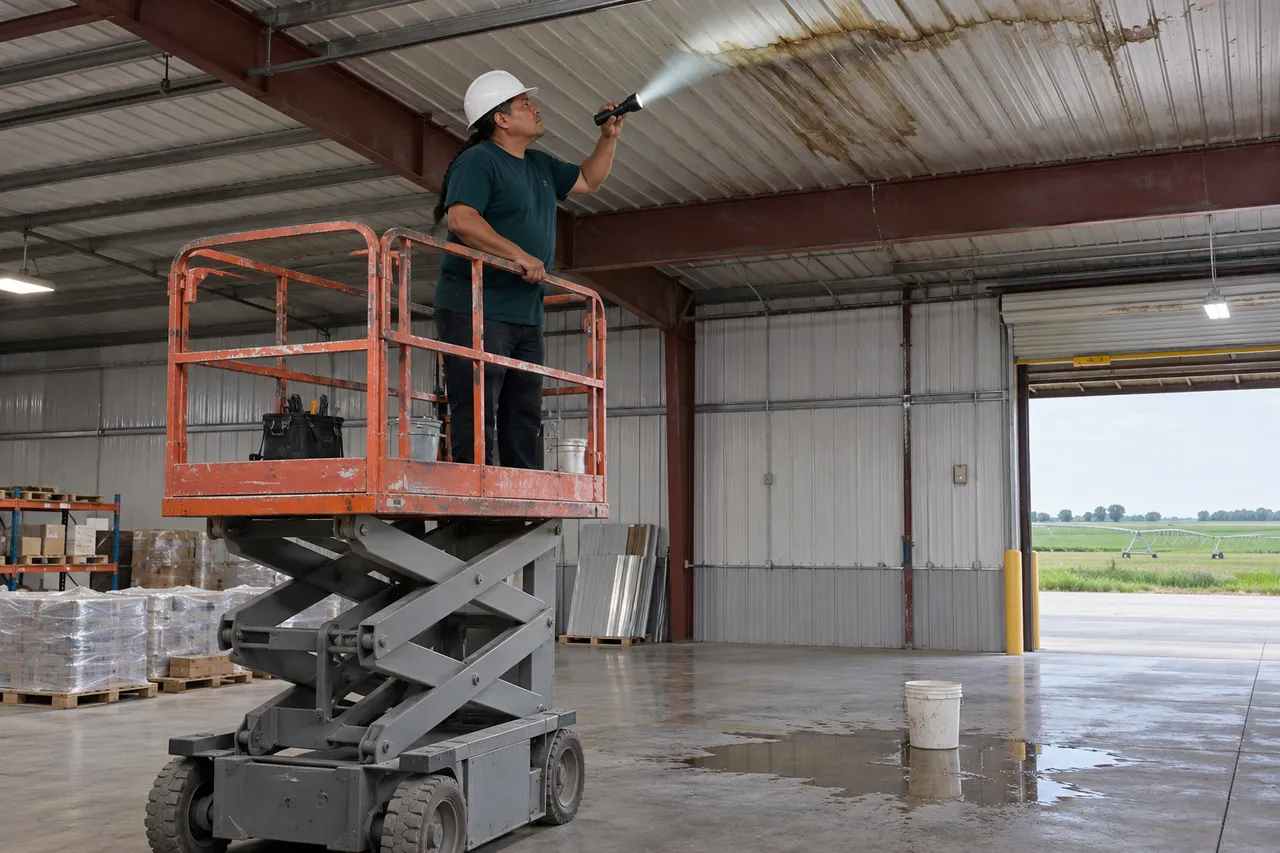
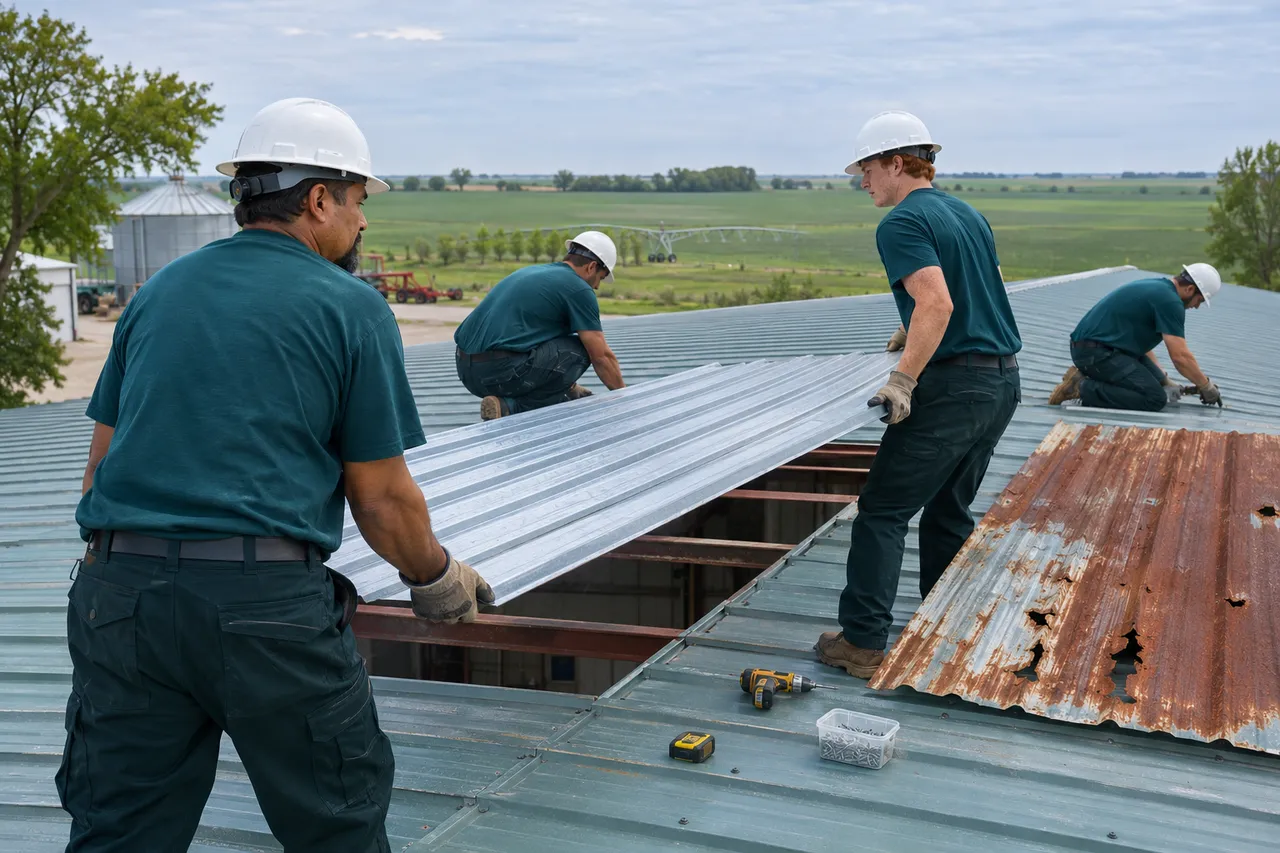
Roofer replacing a rusted panel on a commercial metal roof
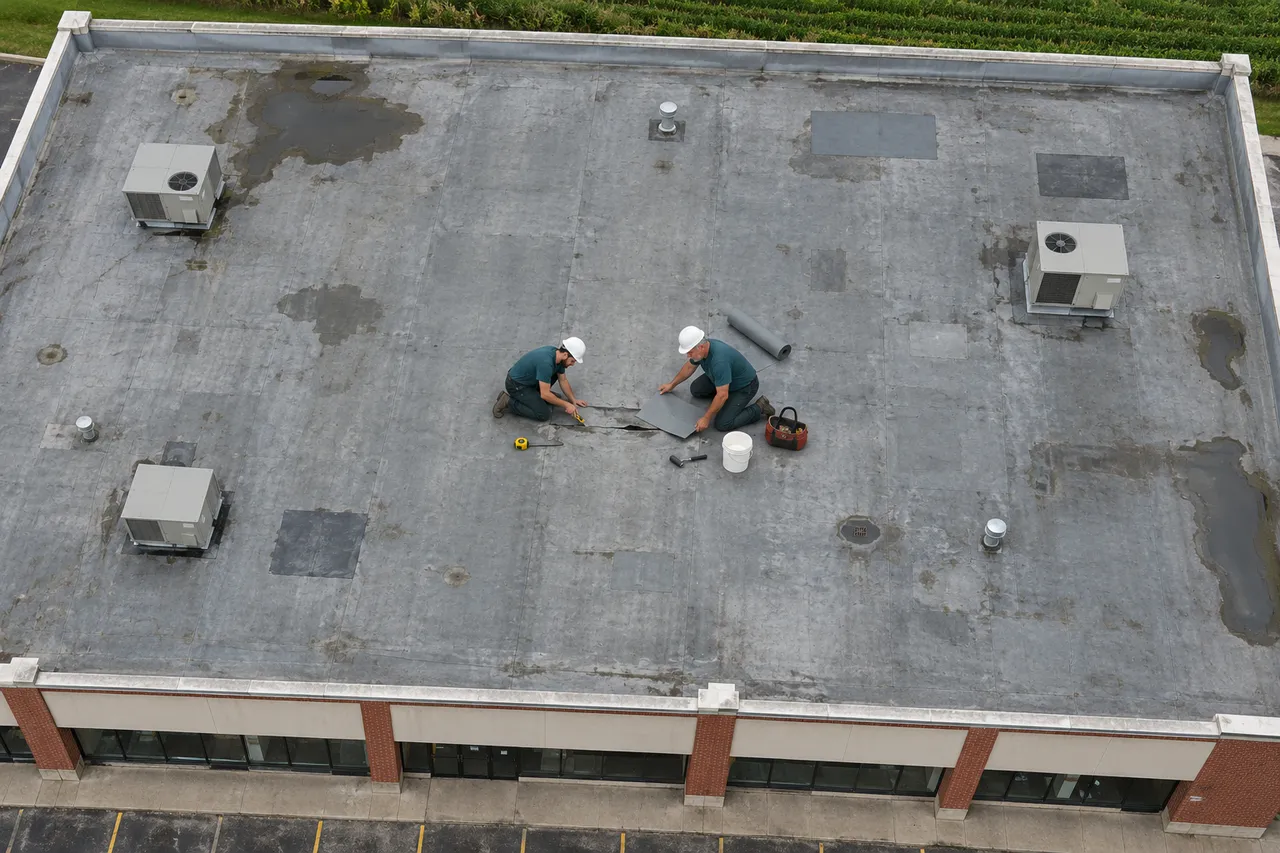
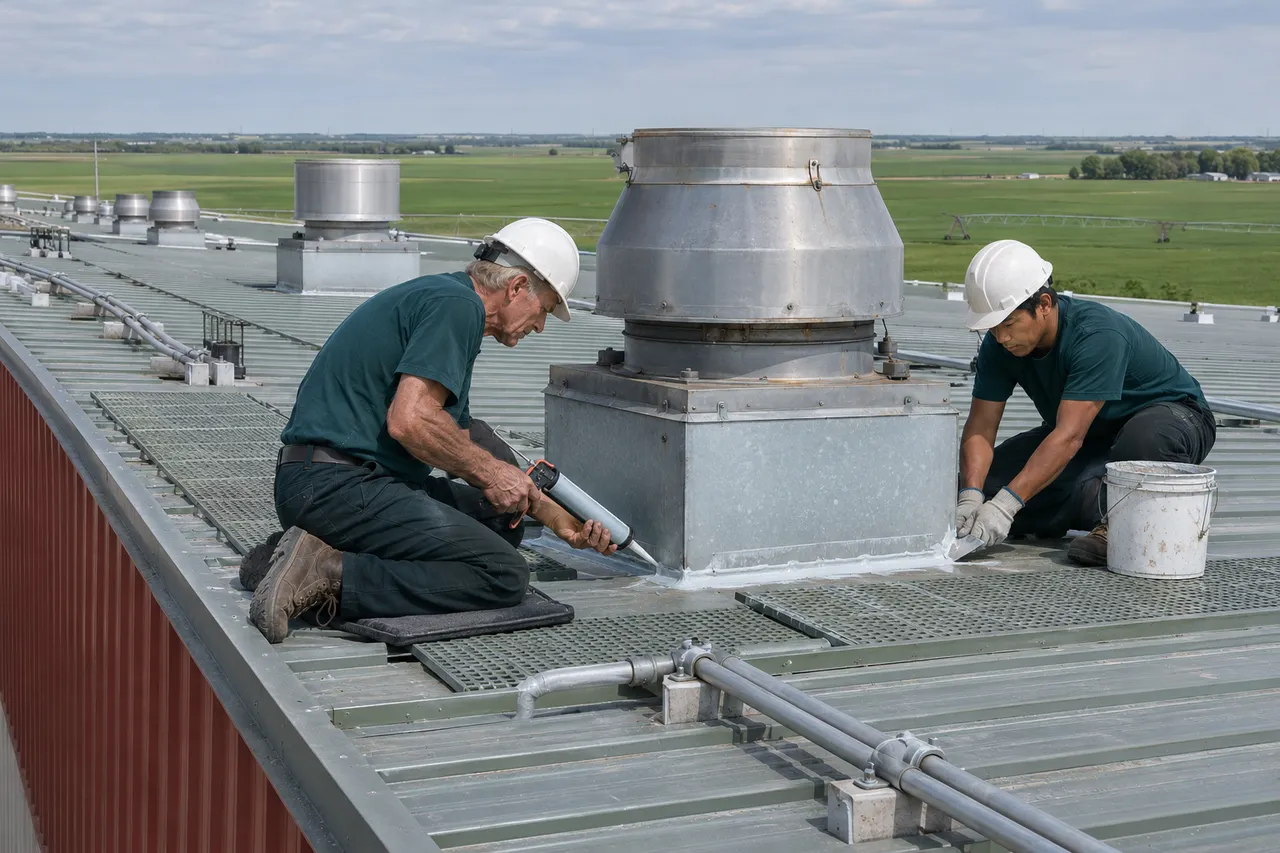
Roofers patching a split in single-ply membrane on a flat commercial roof

Hastings Commercial Metal Roof Repair Contractor

Metal Roof Repair for Shops, Plants, and Co-op Warehouses

As a Hastings commercial metal roof repair contractor, we replace failed screws, reseal laps, and swap rusted panels on exposed-fastener and standing-seam roofs.

  • Panel TypesExposed-fastener and standing-seam
  • Most Common FixScrews and washers
  • Rust CheckScrewdriver test at laps
  • Call(402) 833-7506

Fit Check

Reseal the Panel or Replace It?

Hastings commercial metal roof repair starts with one call on each problem panel: keep it and reseal, or swap it for a new one.

Reseal and Refasten

When It Fits
Surface rust only; the steel is still firm
Screw Holes
Round and tight enough for a fresh fastener
Typical Work
New screws with washers, lap sealant, stitch screws
Material
Fasteners sized for the old holes, butyl tape
Watch Out
Rust hiding under the lap where you cannot see it

Replace the Panel

When It Fits
Rust has eaten through or the steel flakes
Screw Holes
Stripped, oval, or torn through
Typical Work
Remove the panel, set a matching one with new laps
Material
Same profile and gauge, fresh fasteners
Watch Out
Older or uncommon profiles can be hard to match

Metal Roof Conditions

Commercial Metal Roof Repair Needs on Hastings Shops

Metal roofs leak at the joints, the fasteners, and the trim far more often than through the open panel.

Age

Cracked Fastener Washers

You See
Drips lined up along a purlin, rust rings around screw heads.
What It Means
Washers dry out and split, so every screw in that row becomes a small open hole.
Heat Cycling

Screws Backing Out

You See
Screw heads standing proud of the panel, some loose by hand.
What It Means
Panels grow and shrink with each hot day and cold night, slowly working screws out of the purlins.
Moisture

Rust at End Laps

You See
Orange staining where one panel overlaps the next, flaking at the edge.
What It Means
Water held between lapped panels rusts both sheets from the inside out where nobody can see it.
Wind

Loose Ridge Caps and Trim

You See
Ridge cap or eave trim lifting, rattling in a strong west wind.
What It Means
Loose trim lets wind-driven rain under the cap and onto insulation that runs the length of the building.
Age

Cracked Skylight Panels

You See
Yellowed, split, or chalky light panels with stains underneath.
What It Means
Translucent panels go brittle long before the steel does and often crack around their own fasteners.
Equipment

Curb and Pipe Leaks

You See
Water around exhaust fans, unit curbs, or pipe boots in the panel field.
What It Means
Flashing at a curb has to work against the panel ribs; a poorly fitted cricket behind it holds water.

Repair Options

Hastings Commercial Metal Roof Repair Options

Each metal roof failure has a specific fix. This table also shows where that fix stops working.

ProblemRepair We MakeWhen It Falls Short
Failed washersRemove each screw and set an oversized fastener with a new washerHoles torn or rusted wider than the oversize
Missed purlinSeal the hole with a metal patch or stitch it into the lapRows of misses across the whole roof
Open end lapSeparate, clean, re-tape with butyl, and refasten the lapRust through both lapped sheets
Rusted panelReplace with the same profile and gaugePurlins under the panel rusted too
Loose ridge capRefasten with closures and sealant at each ribBent or rusted cap that no longer seats

Drips Over the Shop Floor?

Leaking Now

Water dropping on equipment or stock needs a call. Throw a tarp over what you can, and we will help you narrow down the panel above.

Call Us

Rust or Loose Screws

Seeing rust at laps or screws backing out? Book an inspection before winter and get a written fastener and panel list.

Schedule Free Inspection

Repair Sequence

How a Hastings Commercial Metal Roof Repair Goes

Five decisions, in order, from finding the failed fasteners to recording which panels changed.

  1. Inspect Your Roof

    We walk every purlin line, end lap, ridge, and curb, testing screws by hand and probing rust with a screwdriver. Inside, wet spots on the floor or deck get marked so the roof above can be matched to them.

  2. Keep or Replace the Panel?

    Firm steel with surface rust stays and gets resealed. Steel that flakes or holes rusted through means that panel comes off and a matching one goes on.

  3. Why Did the Screw Fail?

    A cracked washer takes a new fastener in the same hole. A stripped hole takes an oversized screw, and a screw that missed the purlin gets sealed with a patch or stitched into the lap.

  4. Seal Laps and Trim

    Open end laps get separated, cleaned, re-taped with butyl, and fastened back down. Ridge caps and eave trim get closures and fresh fasteners at each rib.

  5. Record the Changes

    Your close-out notes list replaced panels by location, the fastener count, and laps that were resealed, so the next inspection checks those spots first.

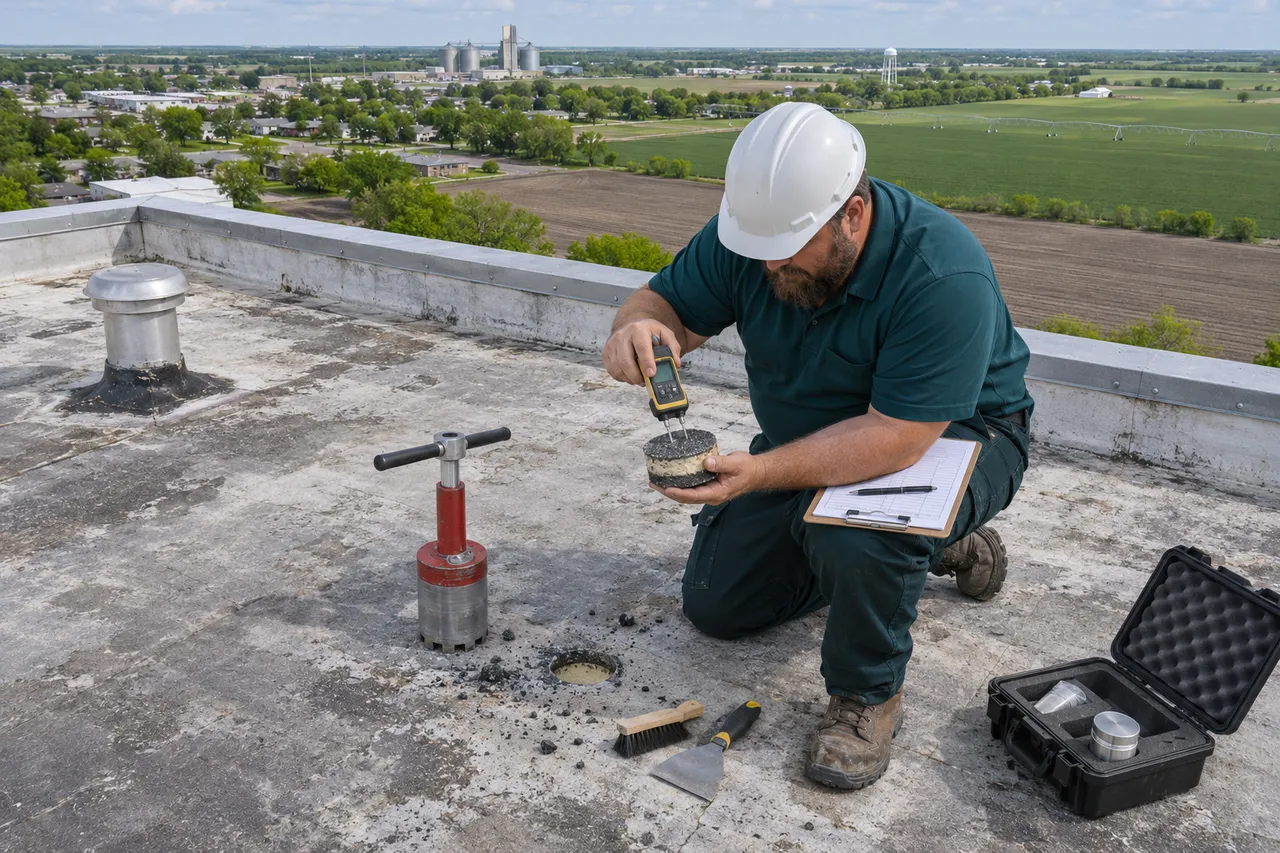
Roofer taking a core cut and moisture reading on a low-slope roof

What It Protects

What Metal Roof Repair Protects in Hastings Commercial Buildings

Metal buildings often run one insulation blanket and one open floor end to end, so a small leak travels.

  • Insulation blanket. Faced insulation under the panels holds water against the steel and sags once it gets wet.
  • Purlins and girts. A drip that lands on a purlin every rain starts rust in the structure that carries the roof.
  • Equipment below. Machines, grain, feed, and parts under a metal roof are often the most expensive thing in the building.
  • Panel life. Sealing laps and swapping a few rusted sheets keeps the rest of the roof working for years longer.
  • Winter heat. Closing gaps at ridge caps and trim cuts drafts and keeps snow from blowing into the building.

Related Repairs

More Roof Repair Services

Some buildings mix metal and membrane roofs, and some leaks start somewhere else entirely.

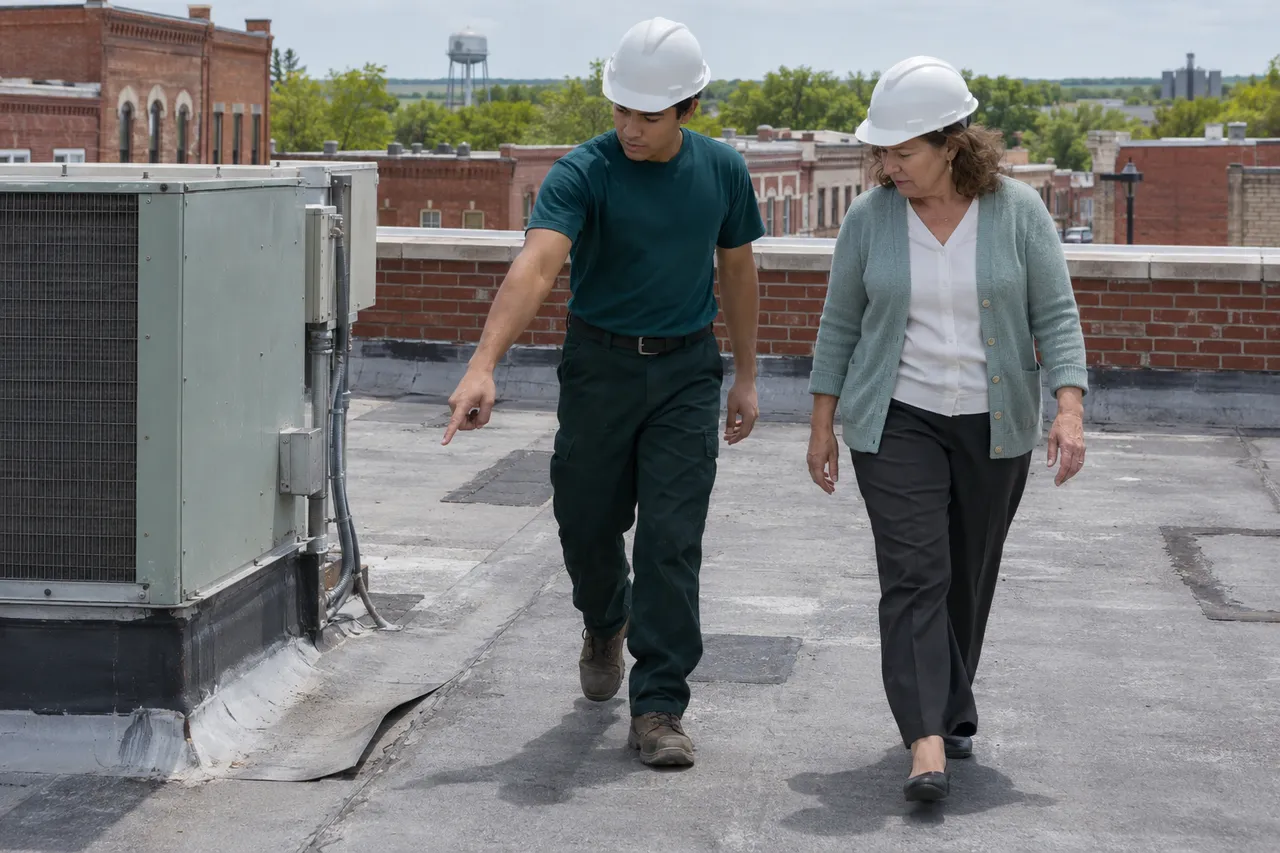
Roofer walking a commercial roof with a building owner

Question about your own roof?

Tell us the panel type and where the drips land, and we will tell you where we would look first.

Call Us

Metal Roof FAQ

Metal Roof Repair Questions for Hastings Commercial Owners

What drives metal roof repair cost on a Hastings building?

The count of fasteners, laps, and panels that need work drives most of it. Resealing a few screws is small work. Replacing rusted panels, rebuilding curb flashing, or refastening ridge caps adds material and lift time. Panel profile matters too, since older or uncommon profiles can be hard to match.

What is the most common cause of metal roof leaks?

Failed fasteners. Rubber washers dry out and crack, and screws back out as panels expand and contract with the temperature. Open end laps, failed sealant at ridge caps, and poor flashing at curbs follow close behind. Very few leaks come through the flat of a panel.

How to fix leaking screw holes in a metal roof

First find out why the screw failed. A cracked washer only needs a new fastener and washer in the same hole. A stripped hole takes an oversized screw. A screw that missed the purlin leaves a hole that gets sealed with a metal patch or a stitch screw into the lap.

When does rusted metal roof panel replacement make sense?

Replacement makes sense when rust has eaten through the steel or the surface flakes under a screwdriver. Surface rust can be cleaned and treated, but perforated panels cannot hold a seal. The new panel matches the old profile and gauge, laps correctly, and goes down with fresh fasteners.

Can a sealant product stop a leak on a metal roof?

It can slow one, but it rarely lasts as the repair. Spray and tube sealants usually go over the cause, such as a backed-out screw or an open lap, without fixing it. Any sealant needs a clean, dry surface to bond. A lasting repair replaces the failed part and seals it with a compatible material.

Hire a Hastings Commercial Metal Roof Repair Contractor

Send the address and the panel type if you know it. We will check fasteners, laps, and rust, then give you a written repair list.

Call (402) 833-7506