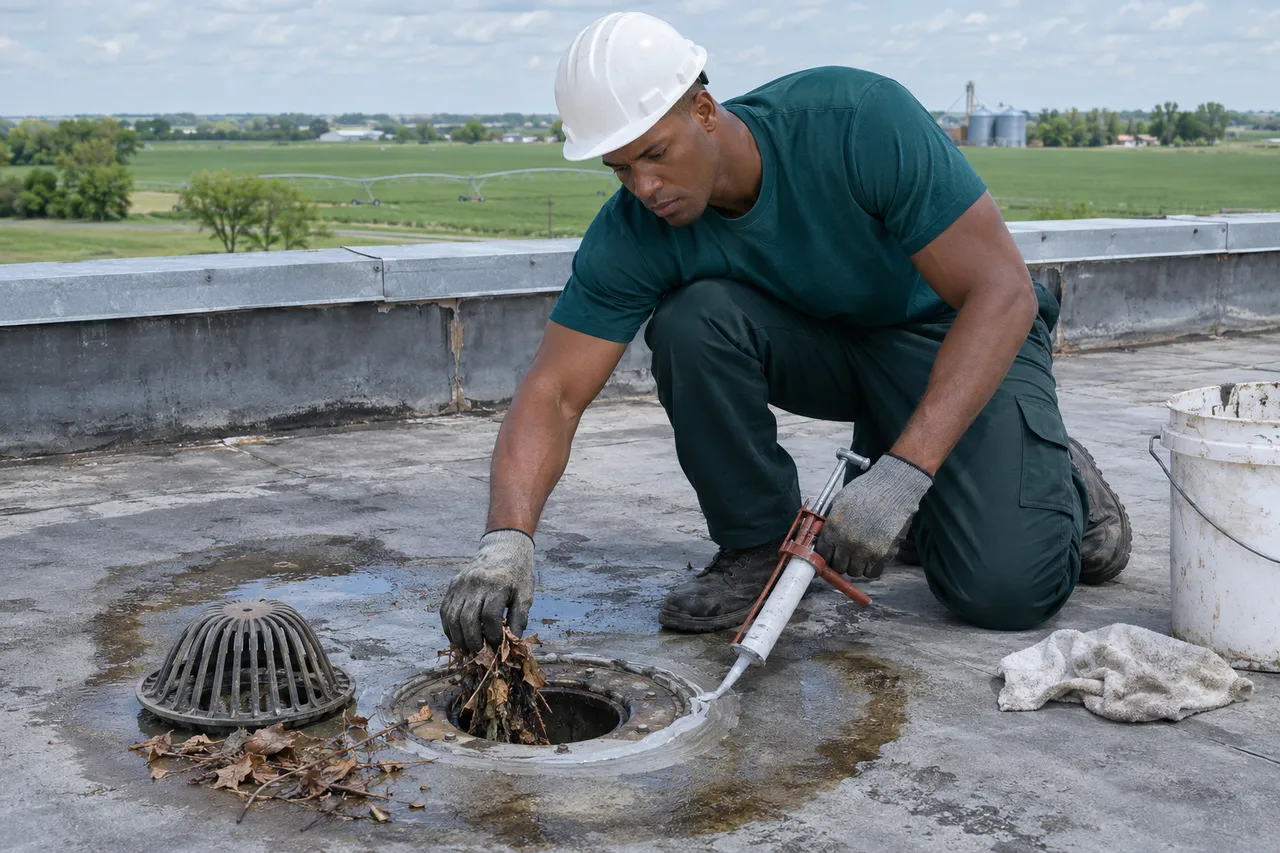
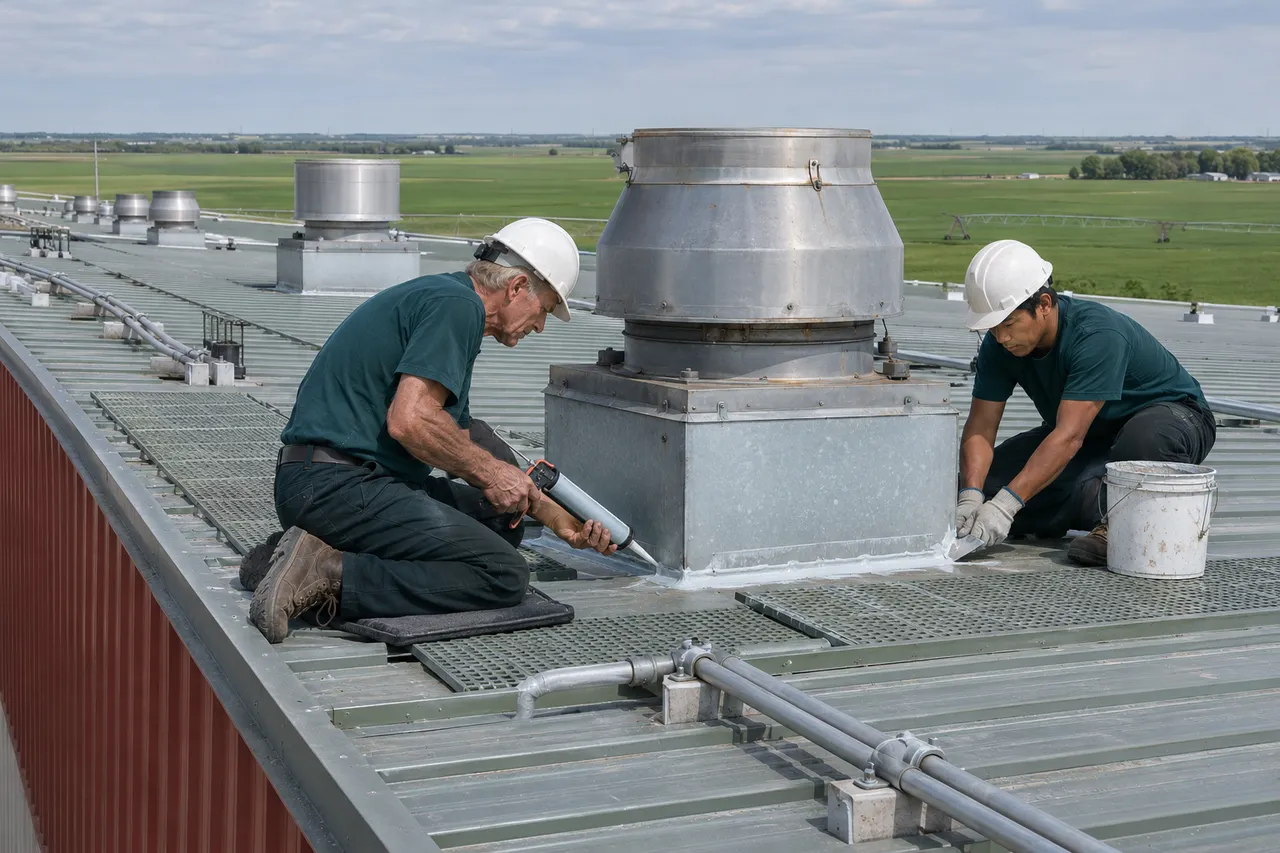
Roofer resealing flashing at an equipment curb on an industrial roof
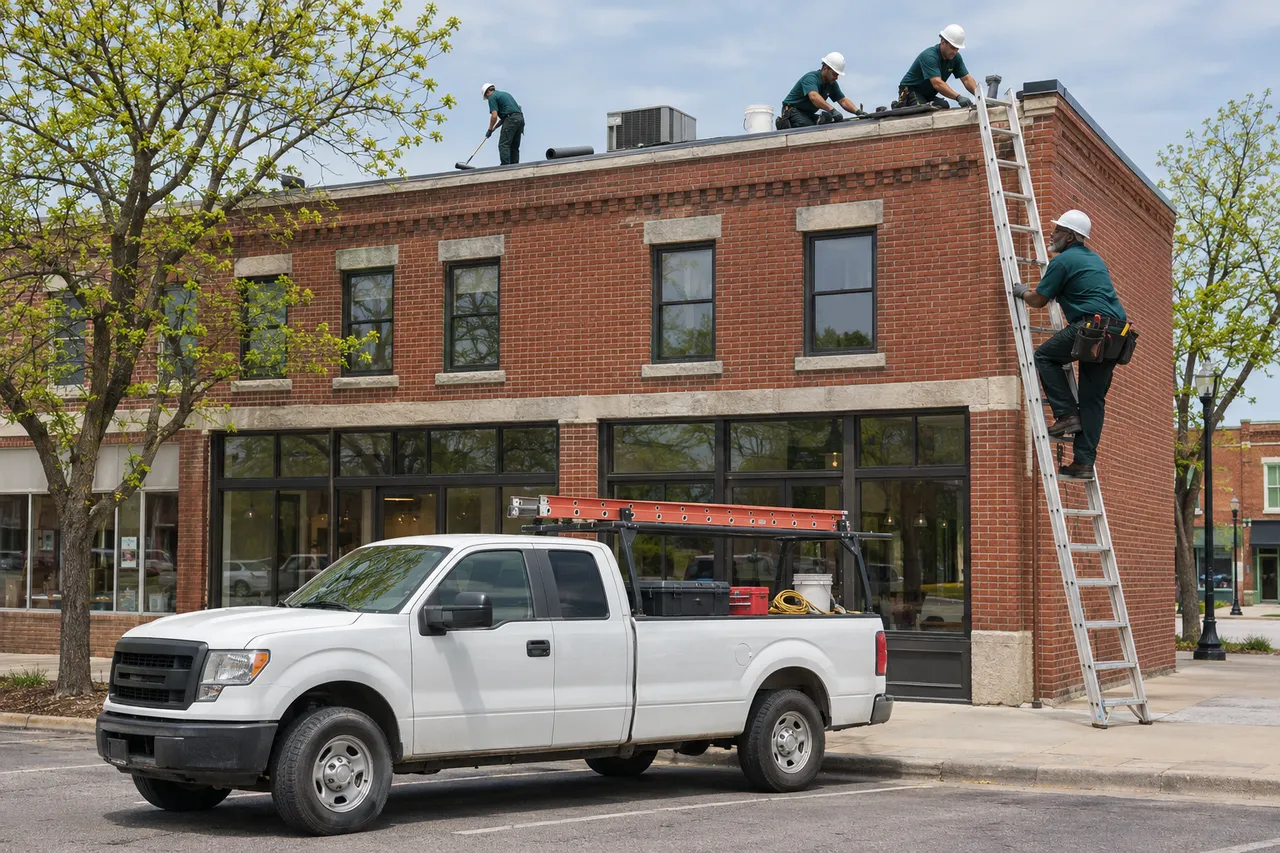
Plain work truck parked beside a commercial building before a roof repair

Hastings Industrial Roof Repair Contractor

Industrial Roof Repair That Keeps an Aging Plant Roof in Service

As a Hastings industrial roof repair contractor, we fix leaks, curb flashing, and exhaust-damaged membrane on plants and large warehouses while production runs.

  • Problem AreasExhaust fans and stacks
  • Site RulesPlant safety rules followed
  • SchedulingAround shifts and shutdowns
  • Call(402) 833-7506

Fit Check

Spot Repair or Planned Section Work?

Hastings industrial roof repair comes in two sizes: spot repairs during production, and section work timed to a shutdown.

Spot Repair During Production

When It Fits
One curb, fan, seam, or panel row is failing
Floor Below
Protected under the work area only
Typical Work
Curb reflashing, patches, fastener rows
Scheduling
Day work coordinated with the plant
Watch Out
Repairs right above sensitive lines

Section Work at Shutdown

When It Fits
Residue has softened membrane across a zone
Floor Below
Equipment covered or moved for the window
Typical Work
Cut-out and rebuild of a roof section
Scheduling
Planned shutdown or slow weeks
Watch Out
Weather on the shutdown dates

Plant Roof Conditions

Industrial Roof Repair Problems on Hastings Plants

Plant roofs take what ordinary roofs take, plus whatever the process sends up through the stacks.

Exhaust

Softened Membrane at Fans

You See
Gummy, swollen, or discolored membrane around exhaust fans.
What It Means
Grease, oils, and some chemicals soften membranes over time until seams and the field itself split.
Vibration

Cracked Curb Flashing

You See
Splits at the corners of curbs under fans and large units.
What It Means
Running equipment shakes its curb all day, and stiff flashing cracks at the corners first.
Foot Traffic

Worn Service Paths

You See
Bare, scuffed membrane between the hatch and equipment.
What It Means
Maintenance staff cross the same path weekly; without walkway pads that strip wears through.
Debris

Clogged Drains and Scuppers

You See
Dust, chaff, or residue piled at drains, water standing behind it.
What It Means
Process dust and plant debris block drains quickly, and backed-up water finds every weak lap.
Freeze

Ice at Blocked Drains

You See
Ice dams at drains and edges after a thaw-and-freeze week.
What It Means
Ice at a drain pushes meltwater sideways under the edge of the membrane and into the board.
Moisture

Rusting Deck Under Steam Vents

You See
Rust stains on the deck underside near vents and wash-down areas.
What It Means
Warm, wet air from the process condenses under the roof and rusts the deck from below.

Repair Options

Hastings Industrial Roof Repair Options

Plant repairs are matched to the exposure on each part of the roof as well as to the membrane type.

ProblemRepair We MakePlant Coordination
Exhaust-softened membraneCut out damaged membrane, install a type rated for that exhaust, add a sacrificial padFan shut off or locked out during the work
Cracked curb flashingRebuild flashing with corner reinforcement to proper heightUnit isolated by plant maintenance
Worn service pathPatch the wear and set walkway pads along the pathMapped with maintenance staff
Clogged drainClear, reset the clamping ring, add a strainer guardDebris source flagged to the plant
Rusted deck areaSection cut-out with deck repair by the right tradeFloor area below closed off

Water Reaching the Production Floor?

Leaking Over Equipment

Call and tell us what sits under the drip. Cover the equipment if it is safe, and we will plan a repair window with your plant contact.

Call Us

Planning Around a Shutdown

A shutdown on the calendar is the best time for section work. Book an inspection now and get the scope in writing.

Schedule Free Inspection

Repair Sequence

Industrial Roof Repair Steps for Hastings Plants

Plant roof repairs follow five decisions, each one made with your maintenance or safety contact.

  1. Inspect Your Roof

    We walk the roof with your maintenance lead, noting each fan, stack, curb, and drain, and the residue around them. Inside, leaks get matched to the lines and equipment they affect.

  2. What Is Coming Out of the Stacks?

    Grease, steam, and chemical exhaust each attack membrane differently. Knowing the exhaust decides which material goes back around that fan.

  3. Now or at Shutdown?

    Spot repairs happen during production. Zones where membrane has softened across a wide area wait for a planned shutdown so the floor below can be protected.

  4. Work Under Plant Rules

    Lockout on fans, hot-work permits, lift locations, and access routes follow your site rules. Each repaired area is closed up before work stops for the day.

  5. Maintenance Notes

    Close-out notes list each repair, the material used near each fan, and a spring and fall checklist your staff can follow between visits.

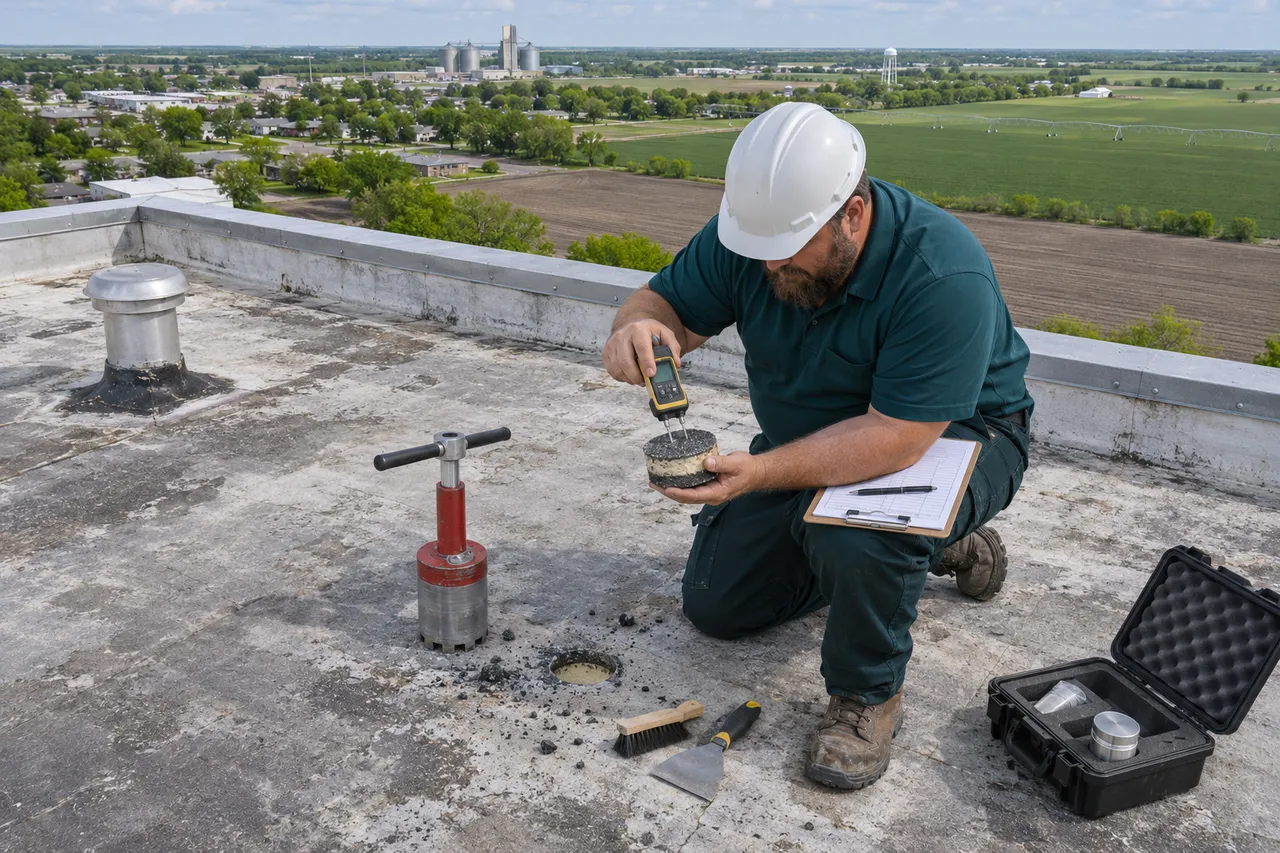
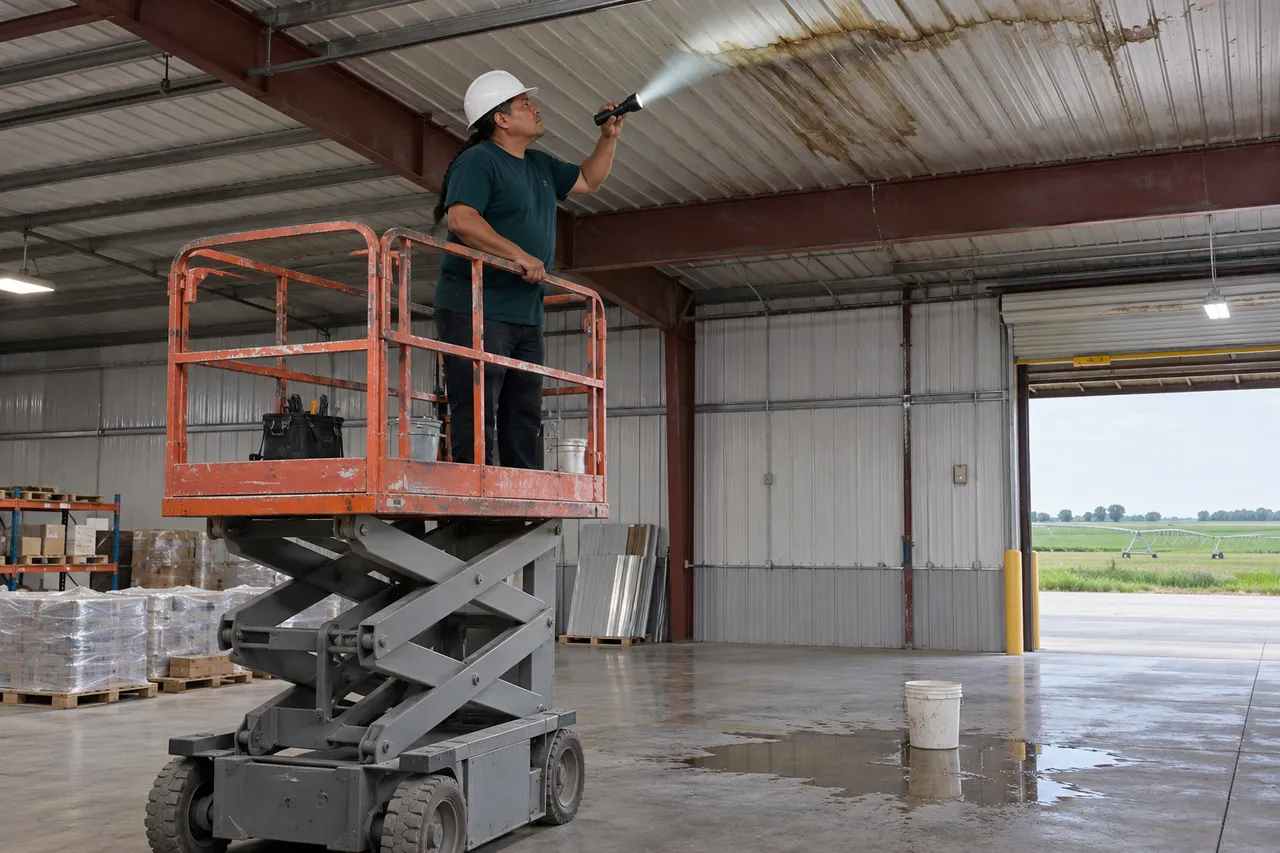
Roofer taking a core cut and moisture reading on a low-slope roof

What It Protects

What Industrial Roof Repair Protects in Hastings Facilities

A plant roof protects more than the building. It protects production, product, and the people below.

  • Production lines. A drip onto controls, conveyors, or electrical panels can stop a line until the leak is found.
  • Product and food safety. Water from the roof over food or feed lines turns a roofing problem into a contamination problem.
  • Worker safety. Wet floors under a leak create slip hazards, and water near electrical gear is worse.
  • The roof deck. Repairs at vents and fans keep condensation and leaks from rusting the deck across the plant.
  • Budget planning. Logged repairs show which zones are wearing fastest, which helps plan a replacement for the right year.

Related Repairs

Repair Services for the Rest of the Plant

Plants often have office wings, metal storage buildings, and leaks that need tracing first.

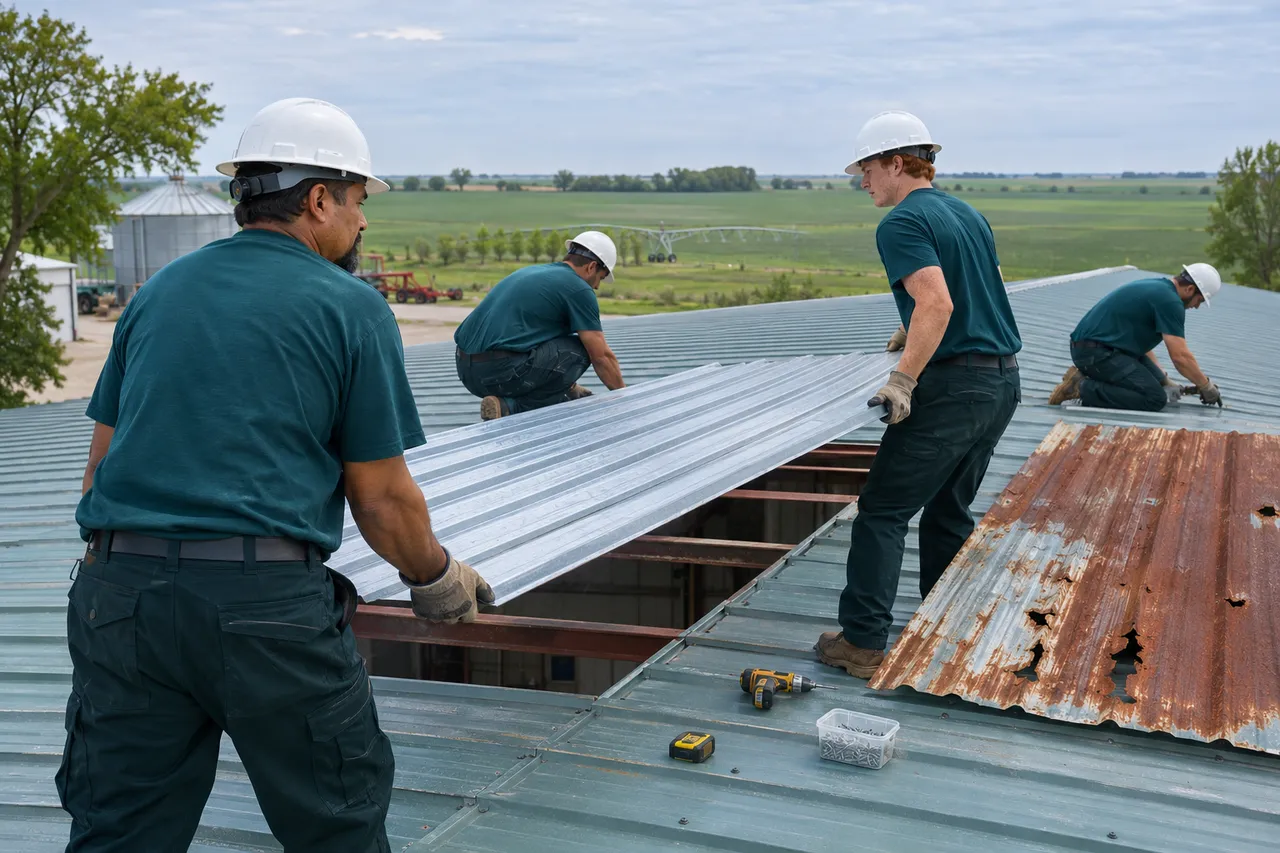
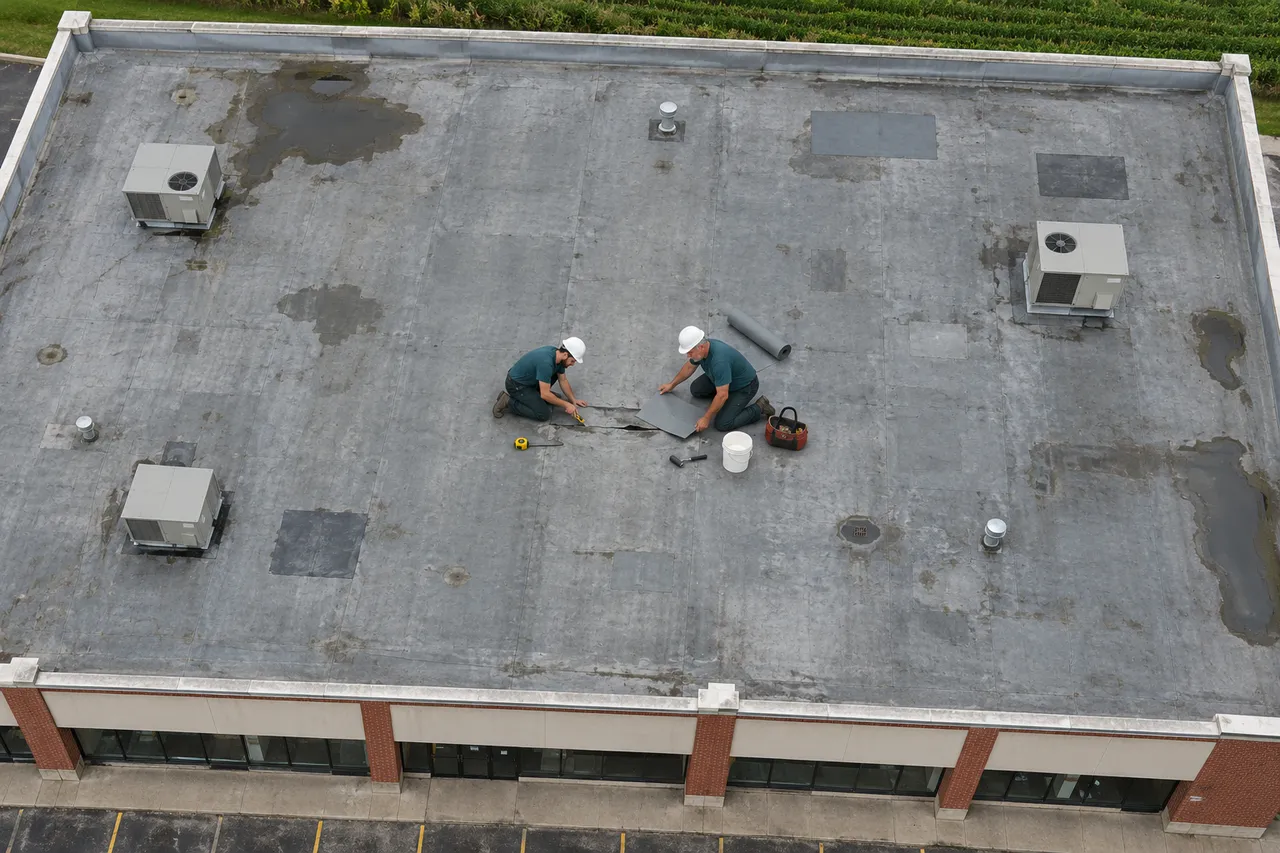
Roofers patching a split in single-ply membrane on a flat commercial roof

Question about your own roof?

Tell us what the plant makes and which fans or curbs leak, and we will plan the first walk with you.

Call Us

Industrial FAQ

Industrial Roof Repair Questions From Hastings Plant Managers

Do you offer industrial roof repair near me in the Hastings area?

Yes. We repair industrial roofs on Hastings plants and large warehouses, including membrane, built-up, and metal systems. Common work includes seam and flashing repairs, rusted panel replacement, and patching around exhaust equipment. Every job starts with an inspection and a written repair list.

How is industrial roof leak repair handled in a working plant?

From the roof side, while production keeps running below. Equipment under the leak gets protected, and lift or crane locations are set with the plant. Work above sensitive lines gets scheduled for breaks or planned shutdowns, and each repaired area is closed before the crew leaves.

How is roof repair around exhaust fans done on industrial buildings?

Degraded membrane around the fan gets removed and replaced with material rated for that exhaust, since grease and chemical exhaust soften many membranes. Fan curbs and flashing get rebuilt, and containment or sacrificial pads go where residue lands. Service access gets planned so technicians do not damage the repair.

What industrial roof maintenance prevents leaks?

Clearing drains, checking flashing, and tightening fasteners on a set schedule prevent most leaks. Spring and fall inspections catch winter and storm damage, walkway pads protect service routes, and process debris gets cleaned off. Logging small repairs at each visit keeps problems from spreading.

How does freeze-thaw damage industrial roofs in Hastings?

Water gets into small openings, freezes, and expands. Each cycle widens cracks in flashing, sealant, and membrane laps. Ice at blocked drains forces water sideways under edges, and snowmelt that refreezes overnight repeats the cycle. Sealing small openings in the fall limits how much water gets in.

Hire a Hastings Industrial Roof Repair Contractor

Tell us about the plant, the roof, and the leaks you are seeing. We will plan the inspection with your maintenance lead.

Call (402) 833-7506